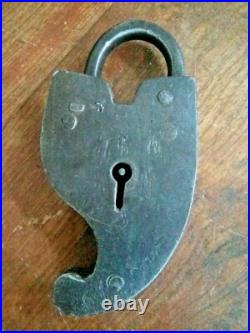
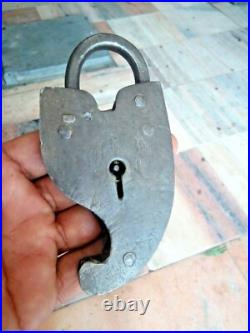
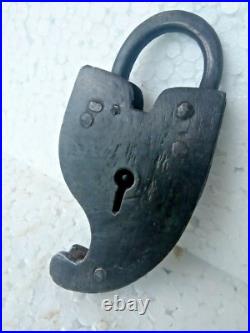
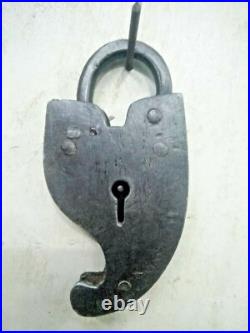
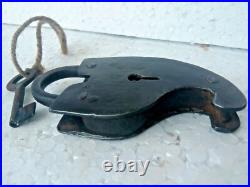
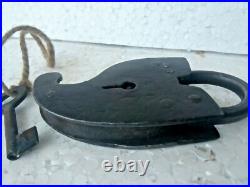
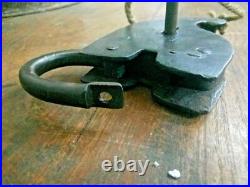
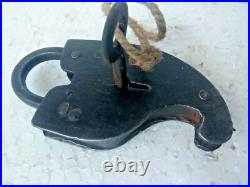
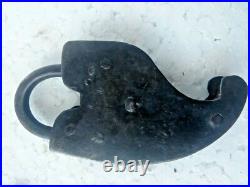
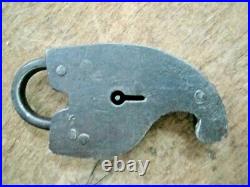
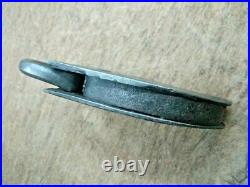
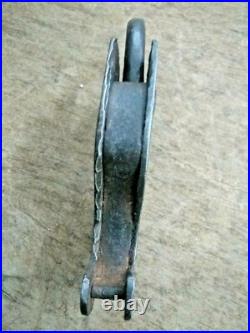
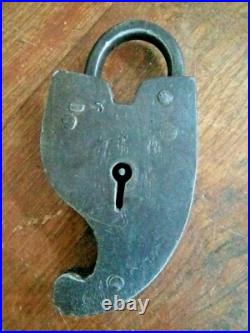
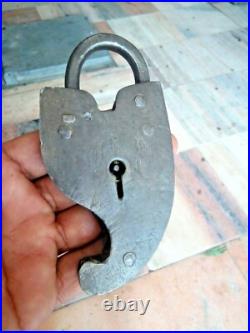
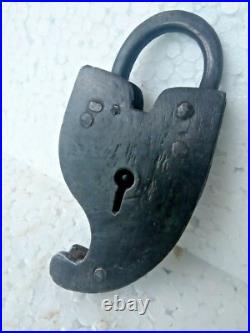
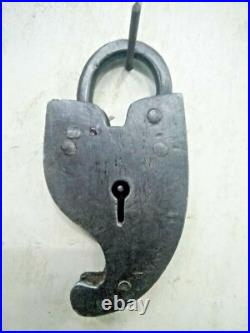
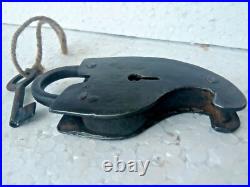
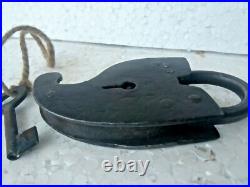
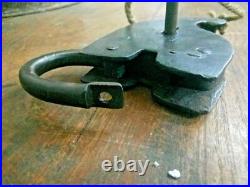
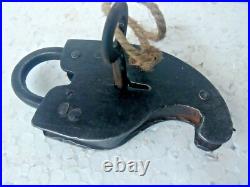
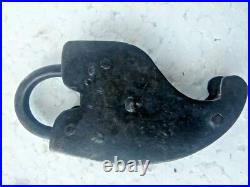
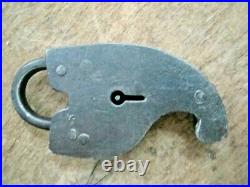
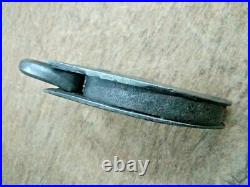
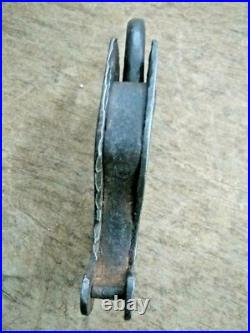
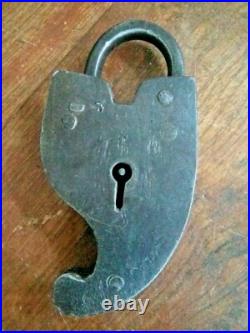
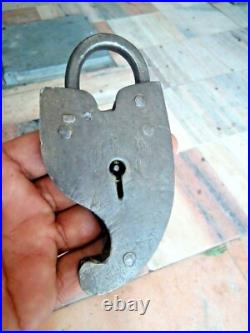
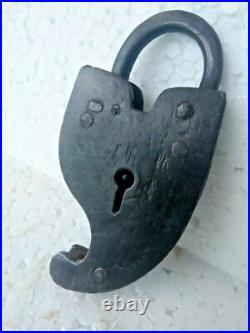
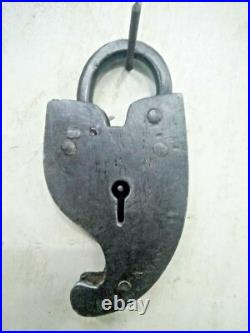
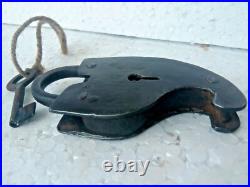
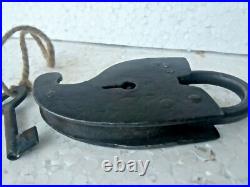
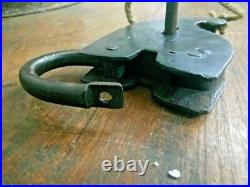
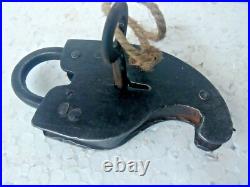
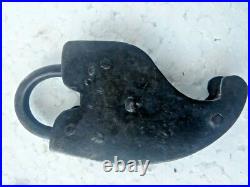
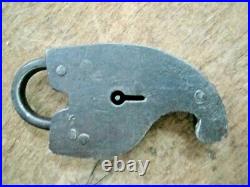
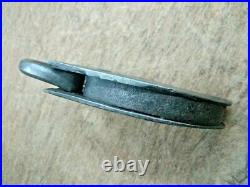
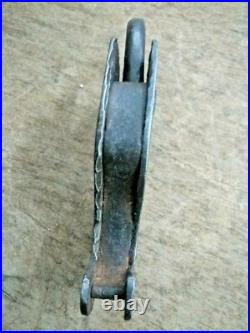
Early RARE ANTIQUE iron Rustic iron fish shape padlock lock with KEY. This product data sheet is originally written in English. Rustic Iron RICH PATINA fish shape padlock lock with key collectible. GOOD CONDITION FOR GOOD COLLECTION. SEE PHOTO MORE DETAIL AND ACTUAL CONDITION. Size-11 x 5.5 x 1.5CM APPROX. PLEASE NOTE THAT THE COLOR OF THE ITEM MAY VARY SLIGHTLY DUE TO LIGHTNING DURING. PHOTO SHOOT OR THE MONITOR’S DISPLAY. We Assure You About Our Good Services With Product Quality And Intricate Details At So Matchless Price And Every Possible Images. We Hope For Your Positive And Prompt Reply. If You Have Any Question Or Specific Requirement, We Would Be Happy To Help U. Thank You For Looking At Our Product. Wholesale Enquiry Are Most Well Come. Your Feedback is important to us. TO DELIVER GOODS WORLDWIDE. ORIGINAL PRODUCT MAY SLIGHTLY VARY DUE TO PHOTOGENIC EFFECT. BRIGHT SIDE OF PHOTO IS SELECTED AND THEY ARE BRIGHT DUE TO HEAVY FLASH AND LIGHT. TELL US HOW CAN WE MAKE YOUR EXPERIENCE A 5-STAR ONE!! PLEASE NOTE THAT THE COLOR OF THE ITEM MAY VARY SLIGHTLY DUE TO LIGHTNING DURING, PHOTO SHOOT OR THE MONITOR’S DISPLAY We Assure You About Our Good Services With Product Quality And Intricate Details At So Matchless Price And Every Possible Images.
Early RARE ANTIQUE iron Rustic iron fish shape padlock lock with KEY. This product data sheet is originally written in English. Rustic Iron RICH PATINA fish shape padlock lock with key collectible. GOOD CONDITION FOR GOOD COLLECTION. SEE PHOTO MORE DETAIL AND ACTUAL CONDITION. Size-11 x 5.5 x 1.5CM APPROX. PLEASE NOTE THAT THE COLOR OF THE ITEM MAY VARY SLIGHTLY DUE TO LIGHTNING DURING. PHOTO SHOOT OR THE MONITOR’S DISPLAY. We Assure You About Our Good Services With Product Quality And Intricate Details At So Matchless Price And Every Possible Images. We Hope For Your Positive And Prompt Reply. If You Have Any Question Or Specific Requirement, We Would Be Happy To Help U. Thank You For Looking At Our Product. Wholesale Enquiry Are Most Well Come. Your Feedback is important to us. TO DELIVER GOODS WORLDWIDE. ORIGINAL PRODUCT MAY SLIGHTLY VARY DUE TO PHOTOGENIC EFFECT. BRIGHT SIDE OF PHOTO IS SELECTED AND THEY ARE BRIGHT DUE TO HEAVY FLASH AND LIGHT. TELL US HOW CAN WE MAKE YOUR EXPERIENCE A 5-STAR ONE!! PLEASE NOTE THAT THE COLOR OF THE ITEM MAY VARY SLIGHTLY DUE TO LIGHTNING DURING, PHOTO SHOOT OR THE MONITOR’S DISPLAY We Assure You About Our Good Services With Product Quality And Intricate Details At So Matchless Price And Every Possible Images.
Early RARE ANTIQUE iron Rustic iron fish shape padlock lock with KEY. This product data sheet is originally written in English. Rustic Iron RICH PATINA fish shape padlock lock with key collectible. GOOD CONDITION FOR GOOD COLLECTION. SEE PHOTO MORE DETAIL AND ACTUAL CONDITION. Size-11 x 5.5 x 1.5CM APPROX. PLEASE NOTE THAT THE COLOR OF THE ITEM MAY VARY SLIGHTLY DUE TO LIGHTNING DURING. PHOTO SHOOT OR THE MONITOR’S DISPLAY. We Assure You About Our Good Services With Product Quality And Intricate Details At So Matchless Price And Every Possible Images. We Hope For Your Positive And Prompt Reply. If You Have Any Question Or Specific Requirement, We Would Be Happy To Help U. Thank You For Looking At Our Product. Wholesale Enquiry Are Most Well Come. Your Feedback is important to us. TO DELIVER GOODS WORLDWIDE. ORIGINAL PRODUCT MAY SLIGHTLY VARY DUE TO PHOTOGENIC EFFECT. BRIGHT SIDE OF PHOTO IS SELECTED AND THEY ARE BRIGHT DUE TO HEAVY FLASH AND LIGHT. TELL US HOW CAN WE MAKE YOUR EXPERIENCE A 5-STAR ONE!! PLEASE NOTE THAT THE COLOR OF THE ITEM MAY VARY SLIGHTLY DUE TO LIGHTNING DURING, PHOTO SHOOT OR THE MONITOR’S DISPLAY We Assure You About Our Good Services With Product Quality And Intricate Details At So Matchless Price And Every Possible Images.
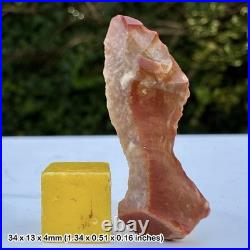
Very Rare Mesolithic to Early Neolithic Fish Shape Stone Tool – Red Flint Artefact from Cromer Beach, Norfolk. This very rare Mesolithic to Early Neolithic fish-shaped stone tool is an extraordinary and authentic prehistoric artefact discovered on Cromer Beach, Norfolk -one of Britain’s most significant archaeological coastlines. Hand-crafted from red flint over 6,000 years ago, it stands as a remarkable example of early human creativity and technological skill. The specimen’s unique shape and fine workmanship mark it as a rare and possibly symbolic tool from the transitional era between the Mesolithic and Neolithic periods. The photograph shows the exact artefact you will receive. All of our artefacts are 100% genuine specimens and come with a Certificate of Authenticity. Archaeological and Cultural Context. The Mesolithic saw hunter-gatherers adapting to post-glacial environments, while the Early Neolithic marked the emergence of farming, animal domestication, and more permanent settlements. Tools from this transitional era often combine practicality with artistry, reflecting both functional and symbolic purposes. The Cromer coast of Norfolk is world-renowned for its prehistoric heritage, with layers of ancient landscapes exposed along its cliffs and beaches. Artefacts recovered from the area-flint blades, scrapers, microliths, and other worked tools-provide vital evidence of continuous human occupation from the Ice Age onward. This particular piece, shaped from deep reddish-brown flint, was likely made by coastal or riverside communities who relied heavily on fishing and hunting for sustenance. Its fish-like form may have been intentionally designed, possibly symbolising the importance of marine life to early cultures in the region. Material Composition and Geological Origin. The artefact is fashioned from red flint, a variant of microcrystalline quartz (SiO?) formed naturally within Upper Cretaceous Chalk formations found across East Anglia. The distinctive reddish hue derives from iron oxide inclusions within the flint matrix, created through ancient geochemical processes in marine sediments. This rich colouration, combined with flint’s hardness and predictable fracture pattern, made red flint a prized material for early toolmaking. Flint was valued by prehistoric peoples for its sharpness, strength, and ability to hold a keen edge. It was collected from natural deposits along riverbeds and coastlines such as those at Cromer, where natural nodules eroded from the chalk cliffs provided an ideal source. This particular specimen displays a deep, warm patina-a smooth, weathered finish formed through mineralisation over thousands of years in the region’s chalky, iron-rich soils. Manufacture and Distinctive Features. This fish-shaped red flint tool was expertly crafted through flint-knapping, a process involving controlled strikes with a hammerstone or antler billet to shape and refine the stone. The maker skillfully removed flakes to form a symmetrical outline reminiscent of a fish’s body, tapering to a defined point and slightly rounded end. Distinct features of this artefact include. A clearly worked body with bilateral symmetry, suggesting intentional shaping. A smooth, curved “tail” section and tapering “head” edge, indicating both function and aesthetic consideration. Visible flake scars and ripples, typical of expertly knapped flint. A fine patina with iron-stained inclusions, providing the striking red coloration. Its shape suggests that it may have served a multi-functional purpose -potentially as a scraper, cutting implement, or symbolic object related to fishing or water. The craftsmanship required to create a piece of this refinement implies both technical mastery and cultural intent. Cultural and Symbolic Significance. Fish-shaped artefacts are exceptionally rare in the prehistoric record and are believed to hold cultural or ritual significance. The association between fish and sustenance, fertility, and water likely made such forms deeply meaningful within early societies. This artefact may have been used both practically and symbolically, embodying the connection between coastal communities and the sea that sustained them. In Mesolithic and Neolithic Britain, fishing was vital for survival, and tools associated with nets, hooks, and watercraft were central to daily life. The artistic shaping of a utilitarian object into the form of a fish could signify reverence toward this essential resource. Alternatively, it may have served as a personal or tribal totem, marking social identity or spiritual belief. This artefact was found on Cromer Beach, Norfolk, a region famous for prehistoric discoveries such as the Cromer Forest Bed fossils and Stone Age artefacts. The site’s unique combination of marine erosion and geological preservation provides unparalleled access to ancient materials. Professionally identified as a Mesolithic to Early Neolithic flint artefact, it has been authenticated and is consistent with typological examples from known prehistoric contexts. Its exceptional preservation, distinctive red coloration, and unusual fish-like shape make it an extremely rare and desirable addition to any collection of Stone Age artefacts. Each specimen is accompanied by a Certificate of Authenticity, verifying its age, provenance, and identification. This remarkable piece represents not only an extraordinary survival of early human craftsmanship but also a fascinating window into the artistry and symbolism of prehistoric life in coastal Britain. Artefact Type: Fish-Shaped Stone Tool. Cultural Period: Mesolithic to Early Neolithic c. Material: Red Flint (Iron Oxide-Rich Microcrystalline Quartz – SiO?). Function: Multi-purpose tool, scraper, or symbolic artefact. Origin: Cromer Beach, Norfolk, England. Condition: Excellent, with natural patina and clear worked edges. Authenticity: 100% genuine artefact – Certificate of Authenticity included.
Very hard to find, if not a rare novelty handcrafted toy from, the port of Kobe in Japan. This is one of several I shall be listing over the coming weeks but collected over a 30 year period. During this time have seen few other example of this model in this condition and working perfectly. Very tactile and complete with it’s original plate bottle and fish. This listing is for the Fish eater only. The others will be listed seperately.
Because of different gold testing practices acid & stone test vs. S Authenticity Guarantee electronic gold testing machine, actual gold contents of the jewelry may vary 1k – 2k from what we list it as. (10k could be 8-11k, 14k could be 12-15k, 18k could be 16-19k etc). This is especially true for vintage & antique jewelry since before 1981 jewelry manufacturers could round up from 13.5k & still stamp as 14k, etc. Different plumb solder (slightly higher or lower carat) can also contribute to this discrepancy. S Authenticity Guarantee electronic gold testing equipment. We measure all of our stones in MM using a gauge. We do our best to correctly estimate carat weights, which can be challenging because we are measuring stones that are already set in jewelry. We try to underestimate the carat weight and measurements of our stones, but there may be some discrepancy in stone weights. We have tested all stones that we identify and guarantee their purity. Within the above parameters. All unidentified stones will be marked as such. All of our diamonds are graded while they are already set in the jewelry. We do our best to accurately yet conservatively grade our diamonds? Clarity and color, which can be made difficult by the diamonds being set already in the jewelry. Our clarity grades may be 2 levels off from another? S opinion of the clarity, and color may be 3 levels off from another? S opinion of the color. We have tested all stones & metals that we identify and guarantee their purity. All of our stones are natural earth mined stones, unless stated otherwise. We like to protect the integrity of the pieces so we do not offer or suggest. Display items and boxes are not included unless stated otherwise.
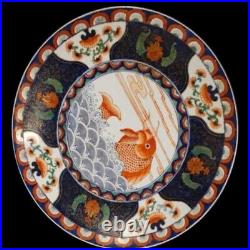
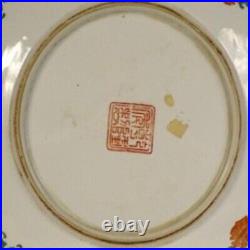
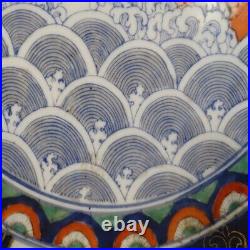
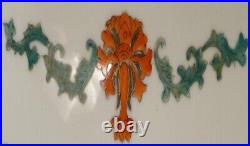
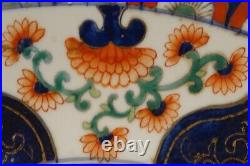
Rare Antique Chinese Porcelain Imari dish 20th, Qianlong sign, fish carp flower. This rare antique Chinese porcelain Imari dish is a stunning piece of history. Made in the 20th century, it features a beautiful fish carp flower design that is truly eye-catching. The dish is made from high-quality porcelain and has a unique multi-color palette that adds to its charm. The Qianlong sign is etched into the bottom of the dish, which is a mark of its authenticity. This dish is perfect for collectors of antique porcelain and those who appreciate the beauty of Chinese art. It is an original piece and is sure to be a cherished addition to any collection. Dish diameter :40.8 cm.
This rare antique still life print from the early 1900s showcases a still life of dead birds and fish. The artist, Charles Busteed Fowler has successfully captured the essence of nature in this medium-sized handmade framed print measuring 17 inches in length and 9 inches in width. The print is a water color with hand-tinted features that add depth dimension to the subject. Fowler was a renound architect. Making these very rare watercolors. Fowler came to the United States in 1908 and stayed till 1913 and went back to Vancouver. The theme of nature is prevalent in these prints, with fish, as well as birds being the main subjects. The style is still life, and the material used is paper. This piece would make a great addition to any art collection and would be perfect for display in any room. One print is signed by Fowler, the other does not have a visible signature.
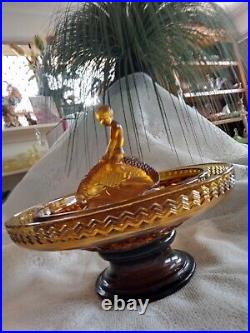
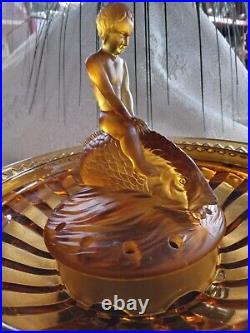
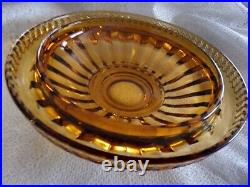
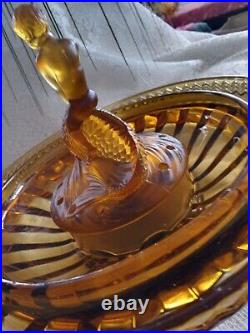
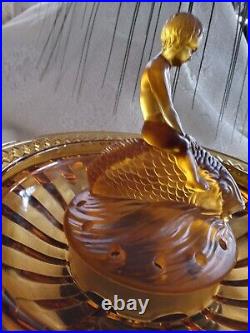
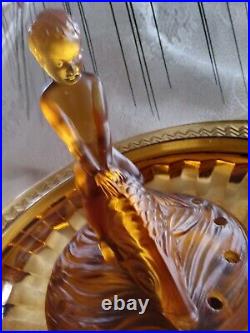
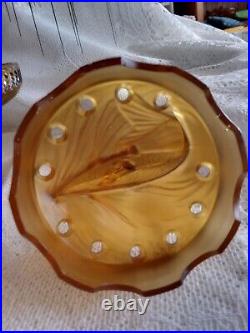
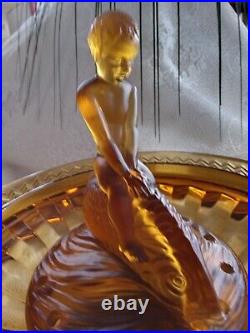
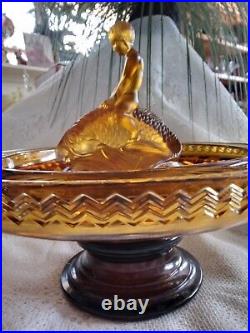
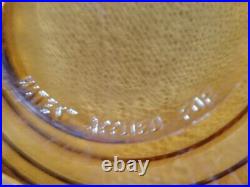
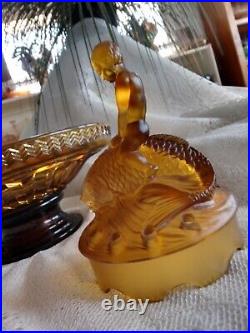
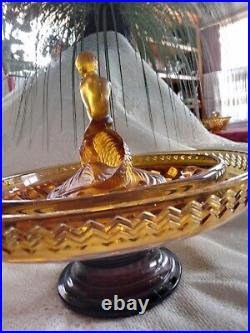
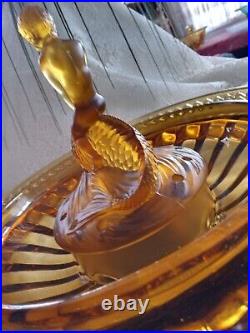
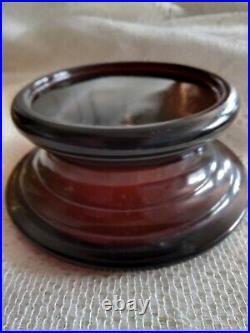
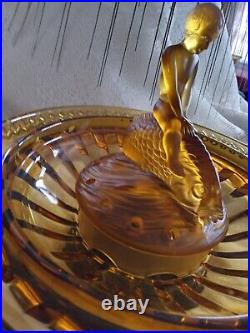
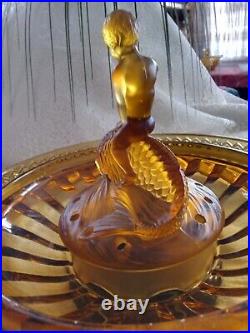
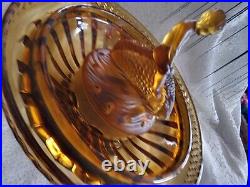
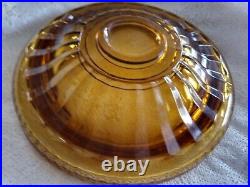
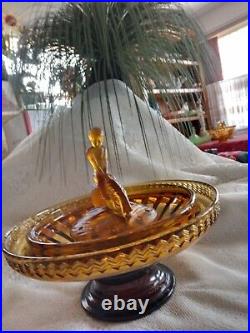
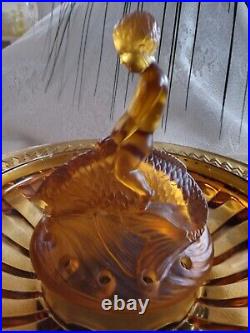
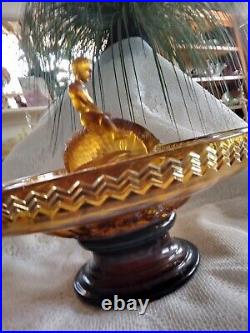
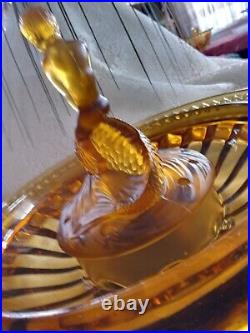
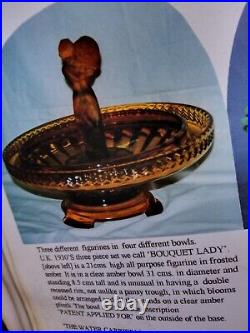
Rare Amber Frosted Art Deco Boy Sitting on the Fish in a Amber Clear Float Bowl Depression Era 1920’s or 1930’s. This is a rare Amber frosted art deco Nude Boy sitting on the Fish Figurine with built in Flower Frog. The float bowl is a clear Amber and is unusual because it has a double rim on the top of the bowl. The glass stand is very dark Amber, that actually looks black from a distance but you can see through it when you hold it up to the light. The Nude Boy sitting on the Fish Figurine with built in Flower Frog is 7.25 inches or 18.5cm high. The built in flower frog is nearly 5.5 inches or 14cm in across. These were manufactured by Schweig Muller & Company in Germany. There are a couple of small chips on the inside of the bottom of the flower frog where it sits in the bowl, otherwise it is in very good condition for its age. The bowl is very attractive and unusual because it has a double recessed rim, or a round trough around the rim. The round bowl is very heavy and made of thick glass. It is 13 inches or 33cm in diameter and is 5.5 inches or 14cm high on the stand. There are no cracks, or repairs on the float bowl but it does have one small bruise in the bottom of the bowl that the Boy sits over when displayed. There are a couple of little chips on the side of the foot on the bottom of the bowl. Is in good condition overall, with a few air bubbles in the bowl. There is a “PATENT APPLIED FOR” inscription made in the bottom of the bowl. The last photo is from the Kevin and Margaret Conway A Visual Reference book has the same bowl in Amber. These are a very rare bowl, they do not come up very often. The dark Amber stand, which looks black is in very good condition with no chips, cracks or damage. It is 6 inches or 15cm in diameter on the bottom and 5.5 inches or 14cm in diameter on the top of the stand. It is 2.5 inches or 6.5cm high. You rarely see these float bowls in this condition anymore, they are a lovely float bowl. It is a good quality figurine, float bowl and stand and is very heavy when combined and on display. These were made in the Depression era 1920’s and 1930’s in between the Two World Wars and are nearly 100 years old. Have a look at all the photos to see the lovely colour and condition. I know what it is like to get broken items and feel bitterly disappointed when they are not wrapped properly. I will double box this lovely Amber Boy on the Fish Float Bowl to protect it, and make sure you get it in the same beautiful condition it is in now.
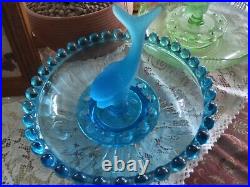
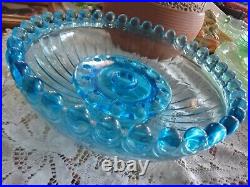
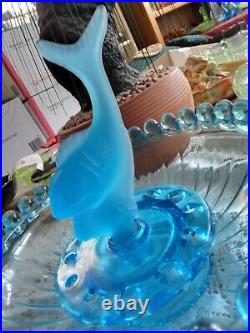
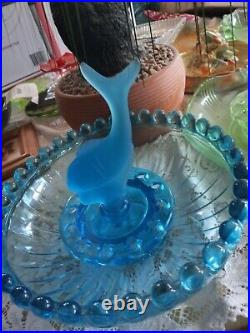
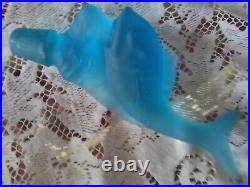
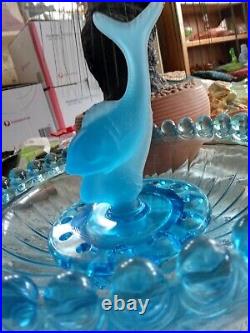
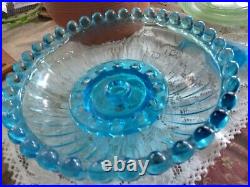
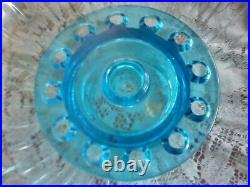
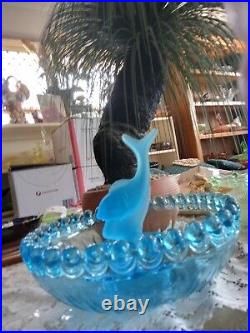
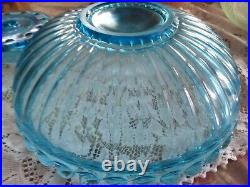
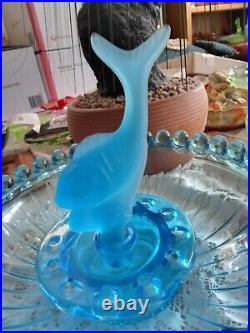
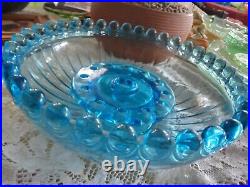
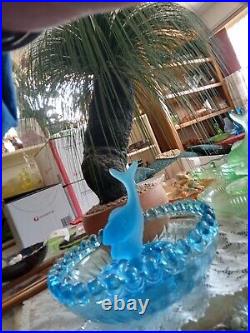
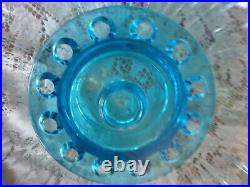
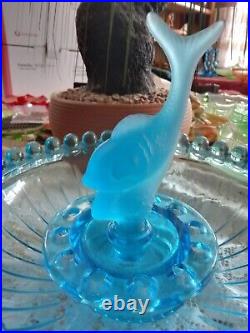
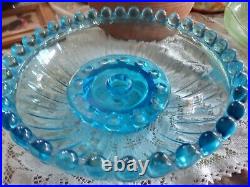
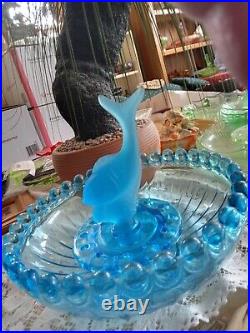
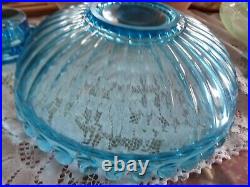
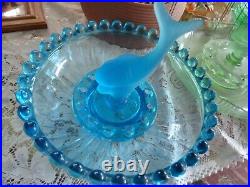
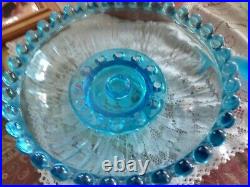
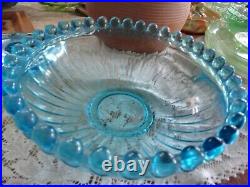
Rare Pretty Blue Flying Fish (Poisson Volant) in. This is an art deco large pretty blue float bowl. Water Splash Pattern Float Bowl Art Deco 1920/1930’s.
Loading...X