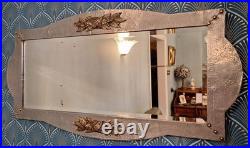
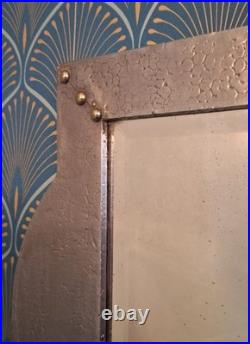
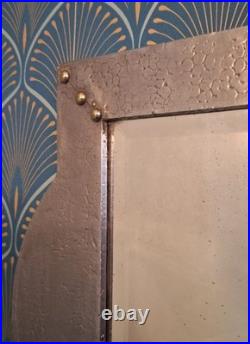
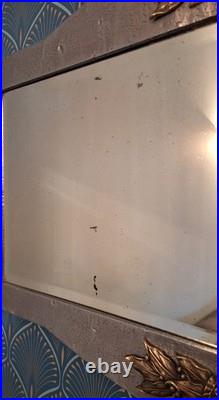
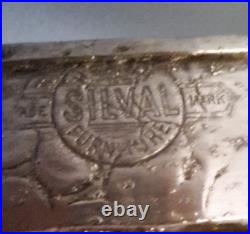
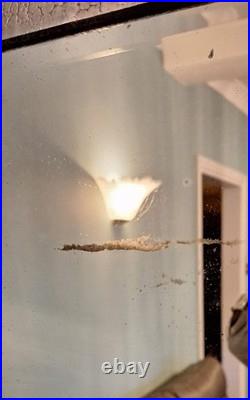
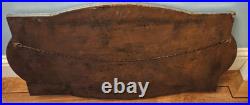
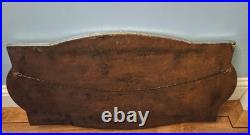
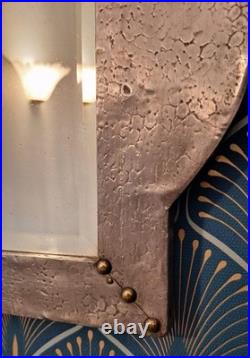
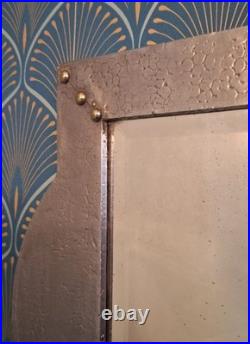
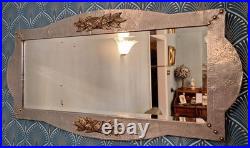
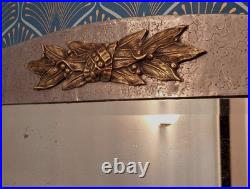
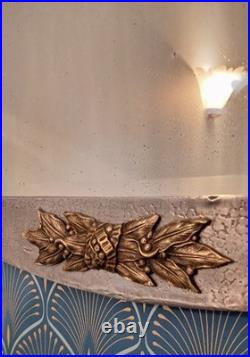
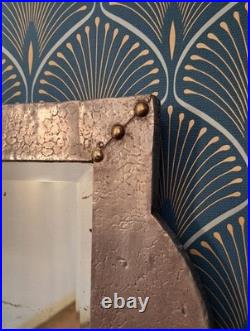
This very rare Arts & Crafts’Silval’ hammered pewter wall mirror is an original piece from the early 20th century, specifically around 1910. It is a stunning mirror with no cracks or chips, lovely patina. Metal back, Original Plate Mirror with attractive foxing. This mirror features a beveled original plate and embodies the Arts & Crafts/Art Deco style. The’Silval’ Furniture maker ensures high quality craftsmanship and attention to detail, making this a unique and decorative piece for any antique collector or admirer of vintage British design. No cracks or chips, lovely patina and foxing to mirror plate as you would expect but this just adds to its aged look and beauty in my opinion – See pics.
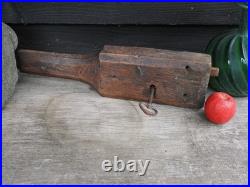
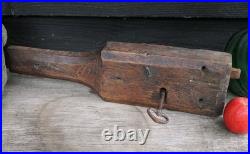
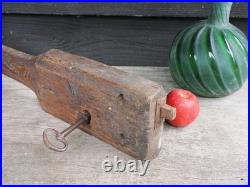
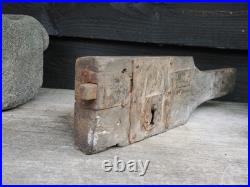
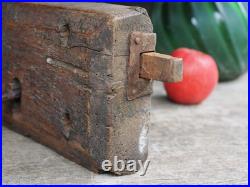
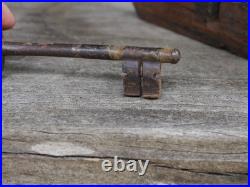
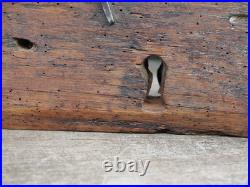
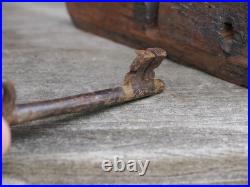
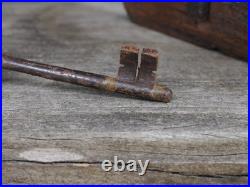
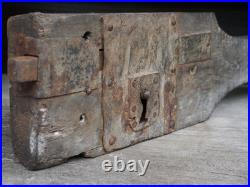
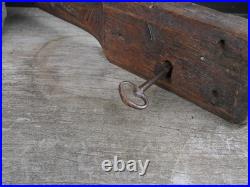
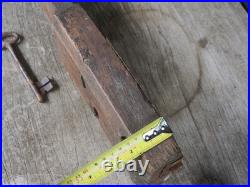
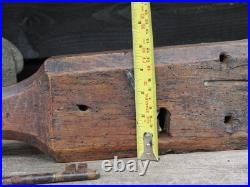
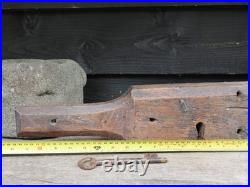
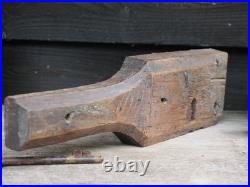
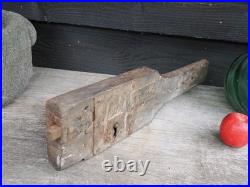
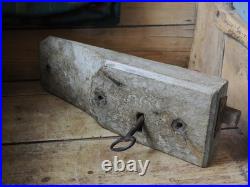
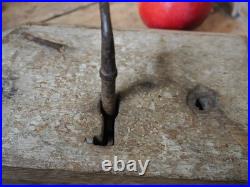
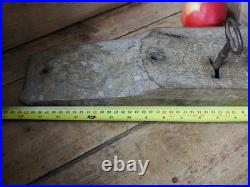
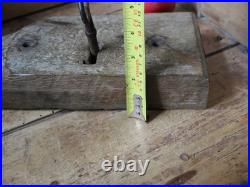
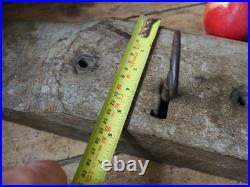
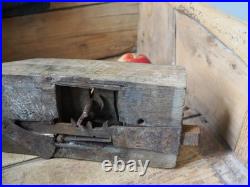
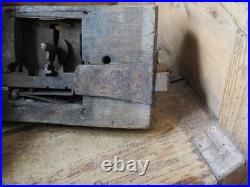
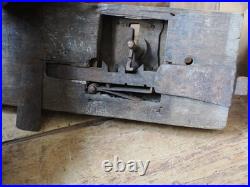
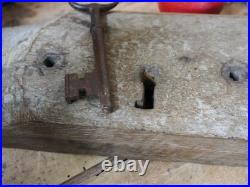
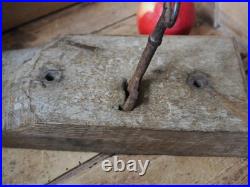
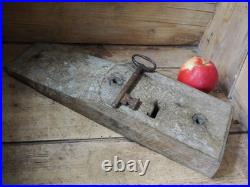
Lovely Early lock with key, the key is correct and the mechanism whilst ancient operates this could be made to work in situ, it’s a Fantastic Early thing, it’s meant to lock you in or out but not designed to operate from both sides of the door. Wear and tear the nails could do with renewing i guess but what would you expect, some old worm holes as usual.
Lovely Early lock with key, the key is correct and the mechanism whilst ancient operates this could be made to work in situ, it’s a Fantastic Early thing, it’s meant to lock you in not be used from both sides? I could be wrong. Wear and tear the nails could do with renewing i guess but what would you expect.
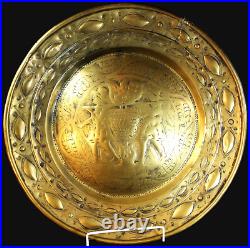
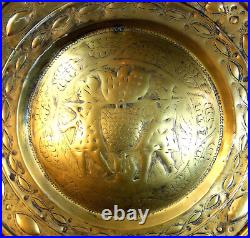
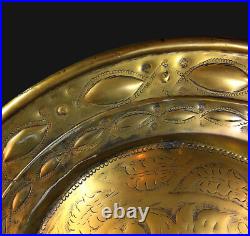
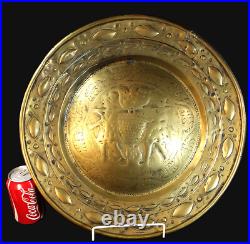
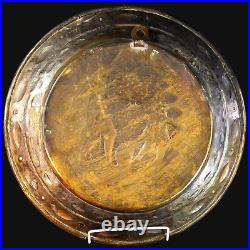
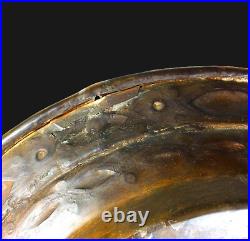
LARGE RARE & UNUSUAL, LATE 16th. BRASS NUREMBERG ALMS DISH. A superb very large, rare and unusual hand wrought brass alms dish made, I would guess, in South Germany and dates from the late 16th. To the early 17th. It is depicted as the mentioned large hand beaten dish with a relief image of what looks to be two men carrying a brasier looks to me like a giant strawberry! But was told is. In fact the spies Joshua and Caleb returning with the grapes of Caleb on poles on a domed central panel surrounded by a band of chased leaves. While its inner and outer borders are decorated with relief lozenges etc. The reverse has a later added brass suspension point- see photographs and details. It measures 17 1/4 (44cm) Dia. Approx; and is in quite good condition for an item of its age and type, although it does have some faults. As you would expect it has various very old repairs and there is wear to its surface to report – see photographs and details. This is a wonderful piece of very early European metalwork with a superb, unusual hand planished image which is in great original condition for an item of its type and age and with a realistic, yet still low, start price should get considerable interest from all collectors. I must apologise for the poor set of photographs which, try as I might, don’t display its obvious age at all well. Under photographic lights the images look almost polished, which is most definitely not the case, in fact the face surface has the patina you would expect from a piece of its age, while the reverse is almost black? THERE IS NO RESERVE ON THIS SALE. Almost everything I sell is in the condition I have bought it, unless otherwise stated, (I have learnt to my cost in the past not to tamper with an item), and therefore I have neither had items repaired nor restored. I will endeavour to report on an item which has had either; however I take no responsibility if an item has been tampered with and I cannot detect it. Please don’t waste your time asking for a b. I will dispatch goods on clearance of any of the above. I do not accept – non UK. All parcels are well packed and protected with strong boxes, bubble wrap and packaging peanuts where necessary. So please read them carefully as they are binding. Do not hesitate to contact me if you need additional information.
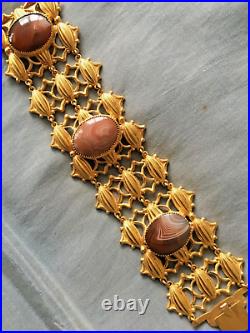
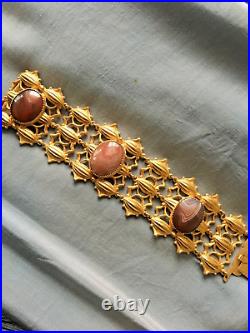
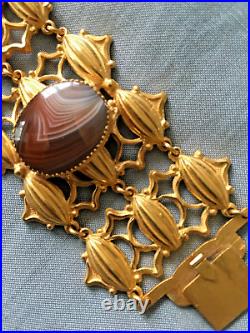
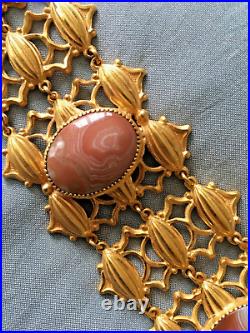
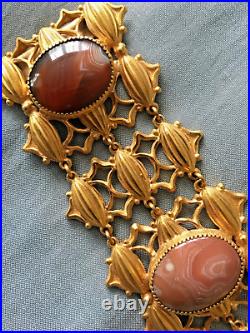
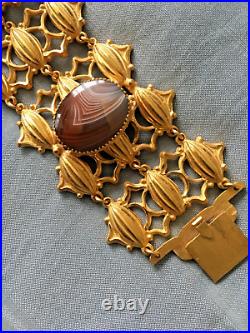
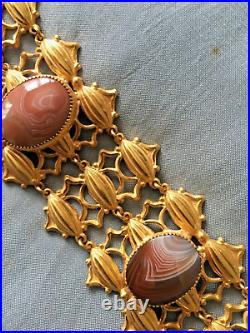
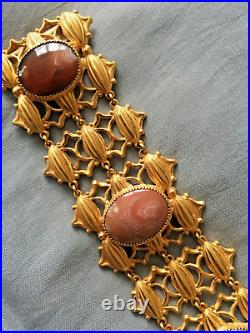
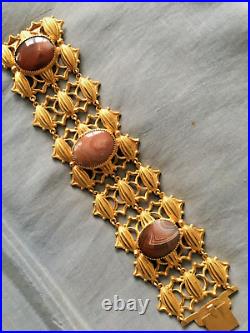
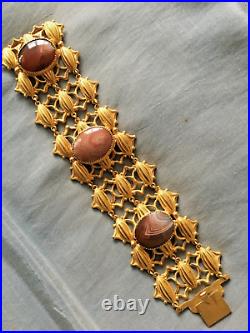
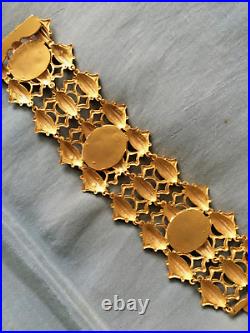
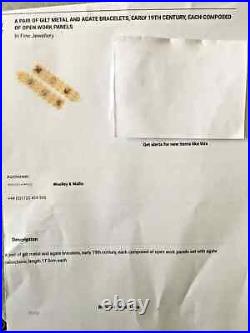
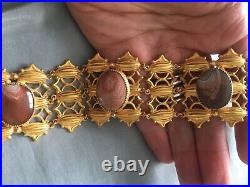
A rare early 19th century Georgian bracelet in gilt metal. It is composed of open work panels set with agate cabochons. Beautiful agate stones in hues of red pink brown white. Length is 17.5cm each. About 44mm wide at the widest point. A substantial piece of jewellery weighing about 50g. One stone has a superficial fracture (see photos- hence price), but remains sturdy. Otherwise, very good condition. One of a pair. Given the value, I’m happy to take a return if you change your mind.
Superb Rare Large Heavy Antique Handcrafted Late Georgian / Early Victorian (1830s) Early Transfer Ware Blue “Old Willow” Semi Porcelain Charger (19″/49cm Long, 15″/38cm Wide, 2.7kg). If you are a “Blue Old Willow” fan then this is a marvellous piece for you. It’s large and heavy but well worth the investment and it will be packed very well to reach you safely. This item is one of the very earliest commercial transfer ware items ever produced in the UK. Close to 200 years old! It predates any porcelain marking periods in the UK. Beautiful original traditional blue old willow pattern in lovely condition as shown in 12 sets of photographs attached. If you are extremely particular, then I would advise there appears to be a repair area although this might well be a manufacture mark as there are no chips anywhere so please browse all 12 photos very carefully particularly along the edge. Any faults appear to be none malignant. Transfer ware is a style of decorated china created to sell to the emerging middle class of the Industrial Revolution in England. First produced in the late 1700s, the style caught on and has remained popular since the early 1800s. Transferware first started appearing on the market in the late 18th century, and exploded in popularity in the 1820s and 1830s. Although the styles of the transfers changed over the years, it has been made continuously since then. Transfer printing is a method of decorating pottery or other materials using an engraved copper or steel plate from which a monochrome print on paper is taken which is then transferred by pressing onto the ceramic piece. Pottery decorated using the technique is known as transferware or transfer ware. The bulk of production was from the dominant Staffordshire pottery industry. America was a major market for English transfer-printed wares, whose imagery was adapted to the American market; several makers made this almost exclusively. The Willow pattern is a distinctive and elaborate chinoiserie pattern used on ceramic kitchen/housewares. It became popular at the end of the 18th century in England when, in its standard form, it was developed by English ceramic artists combining and adapting motifs inspired by fashionable hand-painted blue-and-white wares imported from China. Its creation occurred at a time when mass-production of decorative tableware, at Stoke-on-Trent and elsewhere, was already making use of engraved and printed glaze transfers, rather than hand-painting, for the application of ornament to standardized vessels (transfer ware). The exact moment of the pattern’s invention is not certain. During the 1780s various engravers including Thomas Lucas and Thomas Minton were producing chinoiserie landscape scenes based on Chinese ceramic originals. The Old Willow story is based on the Japanese fairy tale “The Green Willow” and other ancient fairy tales originating in China about the constellations that tell the story of two lovers separated and envied by gods for their love. The lovers can only meet once a year when the stars align. There is an English story about the plates that may or may not have links to China; it was first published as “The Story of the Common Willow Pattern Plate” in the magazine The Family Friend in 1849.
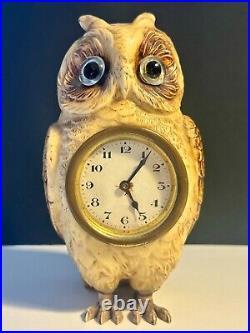
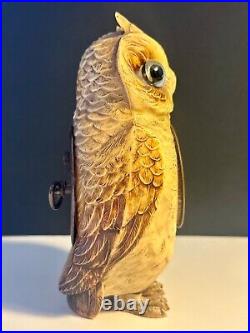
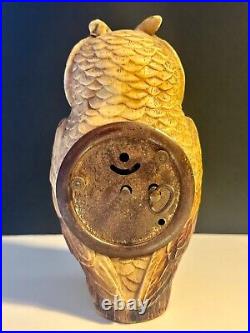
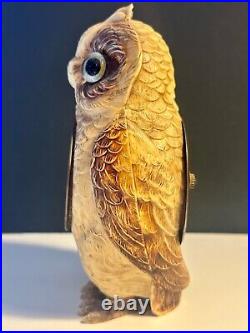
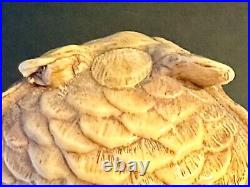
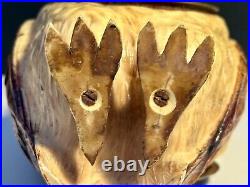
This antique desk clock is a true gem for collectors. With its owl shape and beautiful original painted, celluloid body, it is a stunning piece that will surely add character to any room. Manufactured in the early part of the 20th century, this clock is a genuine antique that boasts its original mechanical movement, works when shaken but will need attention. Measuring 6.5 inches in height, this cream-coloured clock is a perfect addition to any owl or Celluloid collection. The antique clock is an original piece and is sure to impress anyone who sees it. Its animal-themed design and originality make it a rare find that is worth the effort of acquiring.
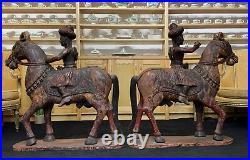
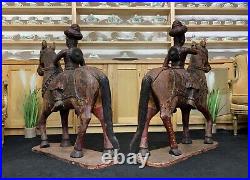
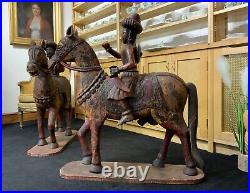
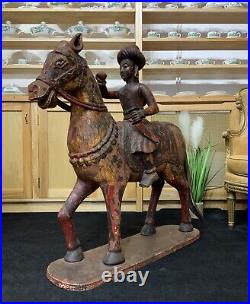
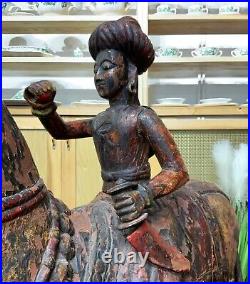
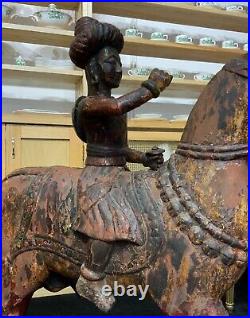
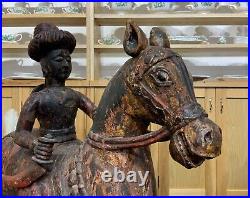
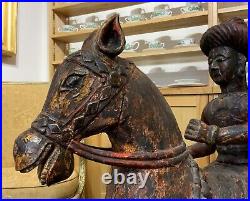
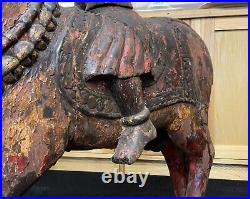
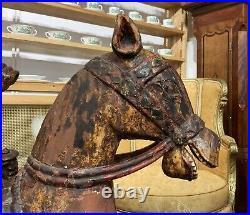
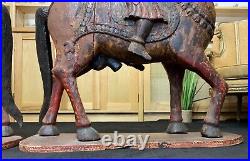
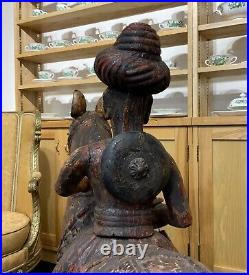
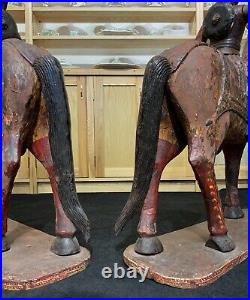
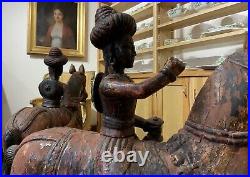
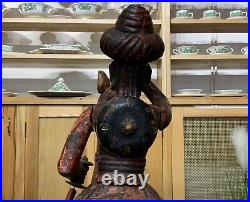
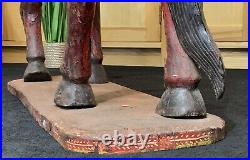
Business & contact Information’. Can be found at the bottom-left of this page. For telephone inquiries, please. LARGE RARE PAIR EARLY 19thc ASIAN POLYCHROME CARVED HORSES WITH MUGHAL RIDERS. This is an exceptionally rare pair of Large Early 19th century Period Polychrome Painted. Carved Asian Stallion Horses with Mughal Warrior Riders. The magnificent, original and unrestored pieces portray a male and female Mughal Warrior Rider, each wearing an Indian Turban, with a pair of ancient-style earrings and carrying a sword on each side. Form, both of the horses and riders are of a stunning patination and each retains remnants of the original paint and pigmentation colours throughout. The horses retain their original Reins, original Bridles and their original Saddles. These period pieces are rare, they are on a grand country house scale, and they both date to at least the early part of the 19th century, and very possibly much earlier! Provenance: Direct from a private collection. Completely original and unrestored. Retaining remnants of the original paint and pigmentation. There are aged-related wood splits in places and a partly broken sword – see images. Ready to be enjoyed immediately. A Certificate Of Authenticity (COA) will be provided by artsonline with this piece. Great care and much time are taken over the safe transportation of the Fine Art and Antique pieces that we sell. We pack extremely carefully, so you can rest assured that your piece will arrive with you in perfect condition. Pay Securely – Telephone orde rs welcome.
A rare early 19th century Georgian bracelet in gilt metal. It is composed of open work panels set with agate cabochons. Beautiful agate stones in hues of red pink brown white. Length is 17.5cm each. About 44mm wide at the widest point. A substantial piece of jewellery weighing about 50g. One stone has a superficial fracture (see photos- hence price), but remains sturdy. Otherwise, very good condition. One of a pair. Given the value, I’m happy to take a return if you change your mind.
Loading...X