
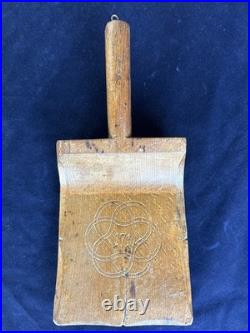
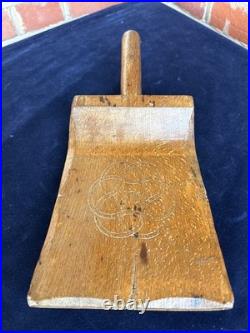
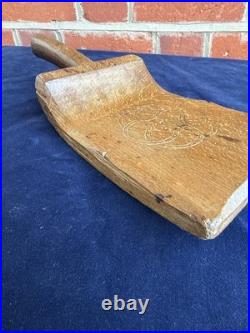
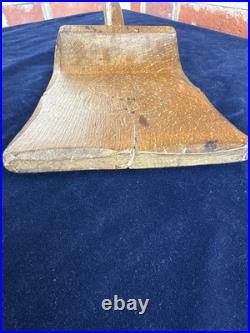
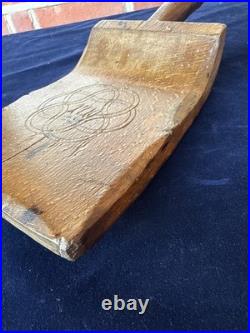
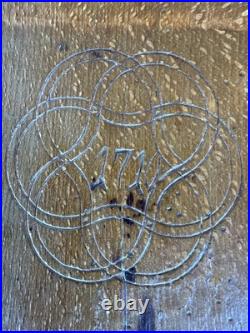
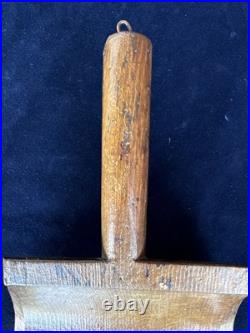
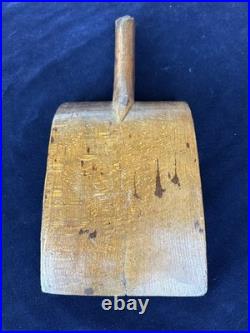
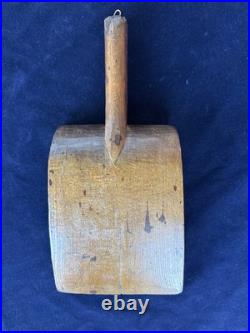
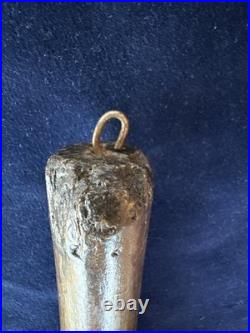
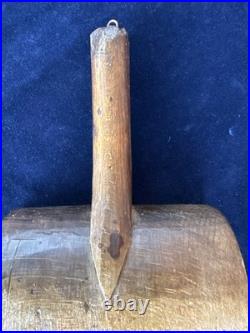
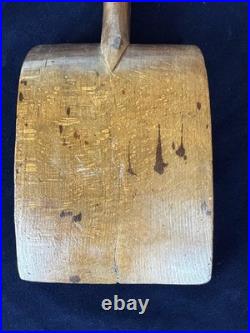
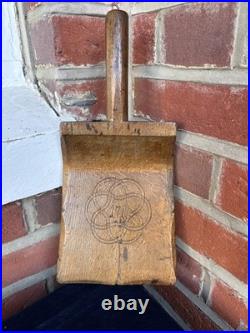
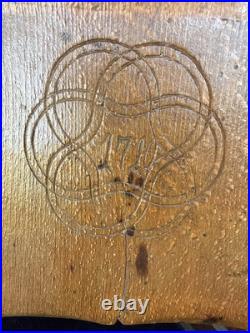
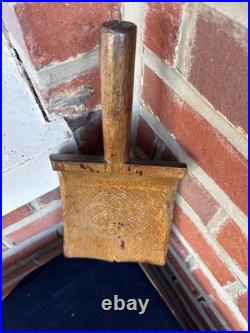
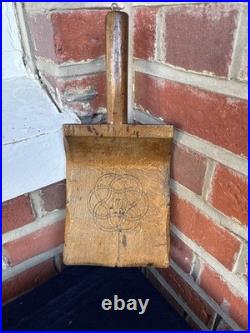
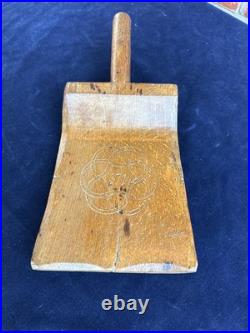
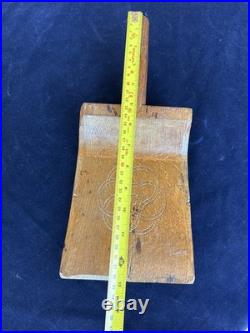
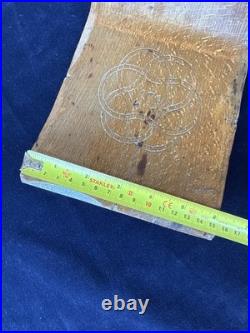
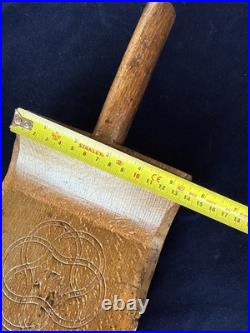
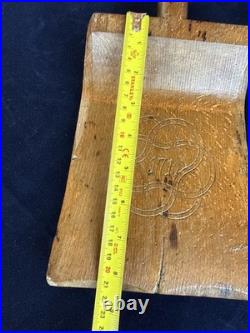
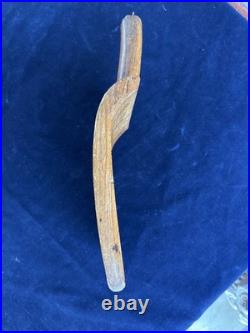
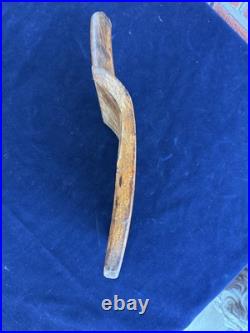
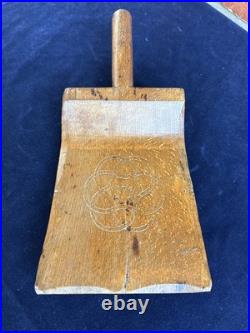

Rare & Authentic 1710 Norwegian Folk Art Washing Bat (Banketre)Up for sale is an exceptional piece of early 18th-century Scandinavian folk art. This authentic Norwegian washing bat (banketre) was hand-carved in 1710, a time when rural communities in Norway handcrafted highly decorative utilitarian tools as courting gifts or wedding tokens. Design & Artistry:The face of the paddle features a beautifully preserved, compass-drawn six-petal geometric rosette (sekstannet rosett). This timeless motif was traditionally carved into household objects to bring good luck and ward off misfortune. Elegantly carved directly inside the center of the geometric knot is the clear presentation year: 1710. Minor surface bumps, scuffs, and historical pitting consistent with domestic utility usage in the 1700s. The structural integrity is stable, and it has not been treated with modern waxes or commercial chemicals, preserving its authentic, bare-aged wood finish. From google reverse image search. This is a vintage Scandinavian wooden laundry tool, specifically a washing bat (known as a banketre in Norwegian), traditionally used in 19th-century domestic laundering to beat and extract water or dirt from wet clothes. Design and Carving: Hand-carved from hardwood with a spade-like paddle and a short handle grip, featuring geometric incised or compass-drawn circular motifs. Folk Art Tradition: These utilitarian pieces of treen were often inscribed with initials or dates as courting gifts or wedding tokens in rural Norway and Scandinavia. If you’d like, I can help you:Research the symbolism of the geometric rosette or knot carvings. Find information on dating and valuing antique Scandinavian treen. The text inside the carving shows the year 1710. This means the washing bat is an authentic piece of early 18th-century Scandinavian folk art (treen). Significance of the InscriptionDating: It places the creation of the piece in the late Baroque period. Courting Gift: In rural Scandinavia, young men often spent winters carving beautiful household tools like this for their sweethearts. The date commemorates the year it was presented. This is fitting for museum collections with similar 18th-century Norwegian or Swedish laundry paddles. That confirms it is a classic Norwegian banketre (washing bat). Pieces like this from the very early 1700s are highly prized examples of traditional Norwegian wood carving (treutskjæring). Regional and Historical ContextThe 1710 Era: During this time, Norway was in a dual-monarchy with Denmark. In rural valleys, remote communities relied heavily on self-sufficiency, leading to highly developed, distinct regional styles of decorative folk art. The Rosette Motifs: The compass-drawn circular pattern shown in your image was one of the most common geometric symbols used across Norwegian folk textiles and woodwork. It is often referred to locally as a sekstannet rosett (six-pointed rosette). PLEASE SEE PHOTOS WHICH FORM ITEM DESCRIPTION.