
Rare Antique Early Victorian Jackfield Pottery Black Ware Teapot (9/23cm)
February 15, 2026
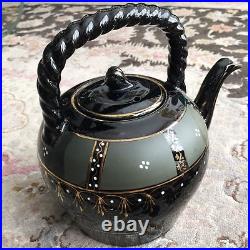
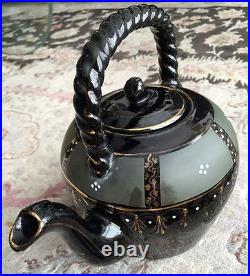
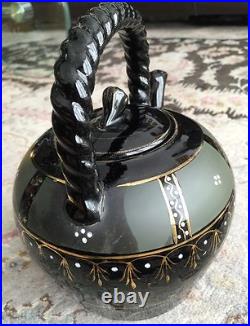
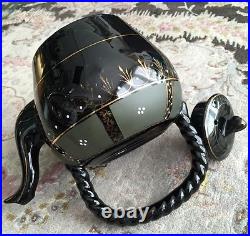
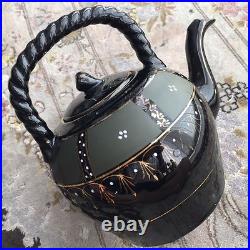
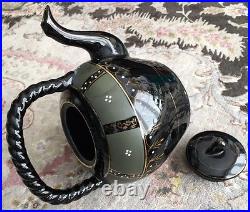
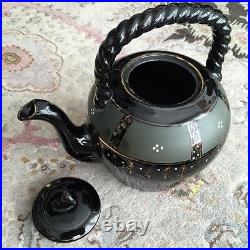
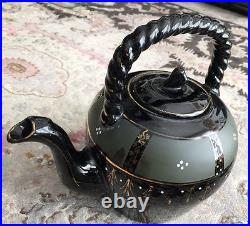
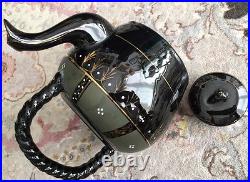
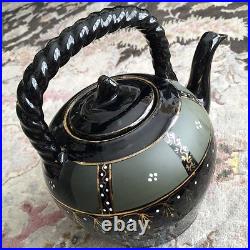
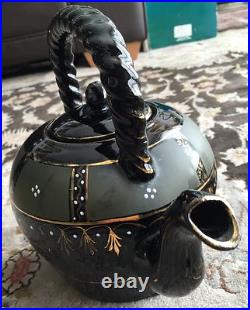
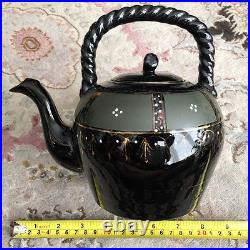

Very rare antique early English Victorian (pre 1850s) glazed Jackfield Pottery “Black Ware”ceramic teapot (approximately 9/23cm). In very good condition without any chips or cracks and minor crazing commensurate with age. This teapot is unusual in shape and colour and has been hand decorated and beautifully gold gilded. Around 175 years old. Beautiful signs of aging. Generally in exceptional condition. Please browse all 12 photographs attached for size and condition as they are self explanatory. Jackfield pottery marks are often minimal or absent on classic pieces, relying more on distinctive features like rich, glossy black glaze, reddish earthenware, gilding/enamel, and specific shapes (like three-footed items); marks, when present, are usually late Victorian or later, including factory names like Maw & Co. Or registration numbers (like Rd117962), as the original 18th-century production from Shropshire was largely unmarked. Key Identifying Features (Unmarked Pieces). Color & Glaze were usually deep, lustrous, almost metallic black glaze, sometimes with hints of purple or red. The body terracotta or reddish earthenware, appearing pale or buff in later periods and decoration faded oil gilding, cold enamels (pale blue/white), or slip designs (floral/foliate). Early items often have three feet or press molded. Unglazed or clear-glazed bases are common. Most authentic early Jackfield ware c. Later Victorian or revival pieces might bear factory names like Maw & Co. Many Staffordshire potters (like Thomas Whieldon) also made “Jackfield-type” ware. The original Jackfield, Shropshire, production peaked in the mid-18th century; later items are often “Jackfield-type” or revivals. Jackfield pottery, originating in Jackfield, Shropshire, England, from the 1713 founding by Richard Thursfield, is famous for its lustrous, highly vitrified black earthenware decorated with oil-gilded flowers and figures, mirroring Japanese lacquerware. While the original pottery thrived in the mid-18th century, the style saw revivals, with later production shifting heavily towards high-quality decorative tiles by companies like Craven Dunnill and Maw & Co, making Jackfield a significant center for tiles, including those used in famous buildings and the London Underground, with some production continuing today. Key Periods & Characteristics. The iconic black-glazed earthenware (Jackfield Ware) was made by the Thursfield family, sometimes featuring Jacobite inscriptions and oil-gilding. Potters like Thomas Whieldon in Staffordshire also made similar “Jackfield-type” wares, often with redder clay. Victorian Era (19th Century). Production expanded significantly into tiles, becoming a major global supplier of decorative tiles, including encaustic tiles. 20th Century & Beyond. The manufacturing, including Art Nouveau and Art Deco styles, continued until the 1970s, with specialist production for conservation and restoration (like for the Houses of Parliament) occurring even today. The village of Jackfield became a significant industrial hub for ceramics, supported by local clays, coal, and river transport on the River Severn. The history is preserved at the Jackfield Museum, part of the Ironbridge Gorge Museums in the UK.