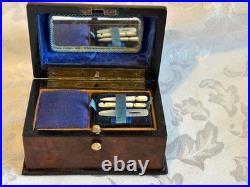
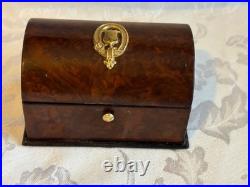
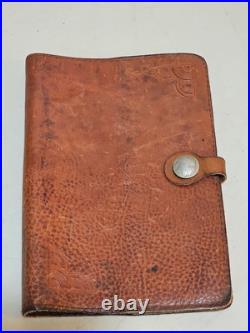
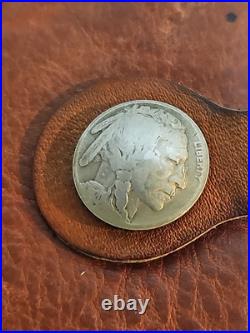
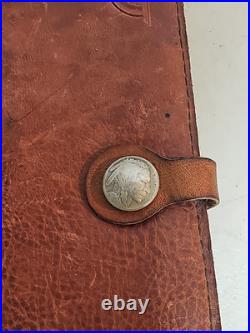
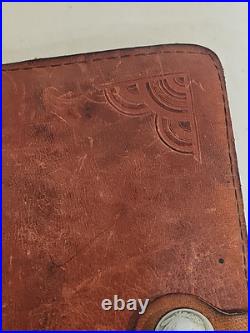
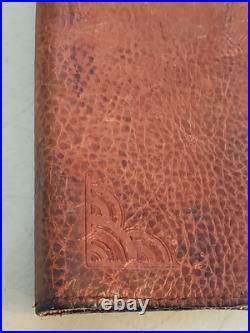
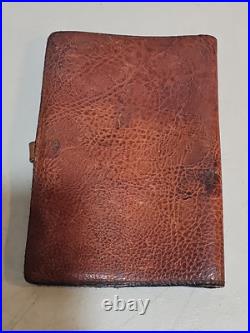
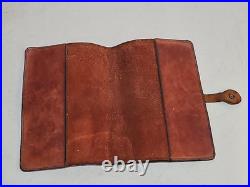
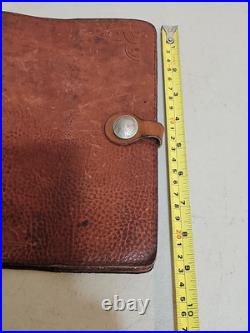
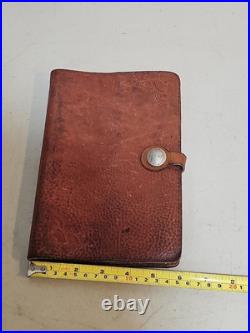
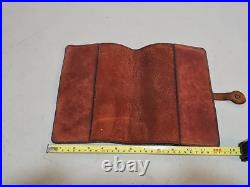
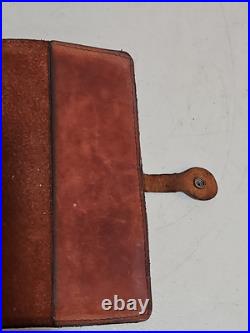
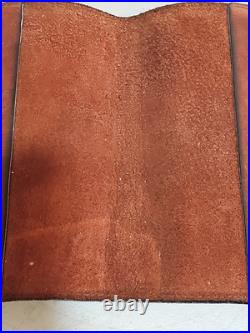
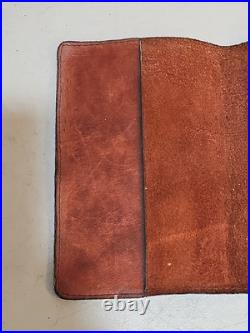
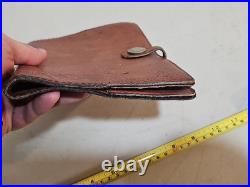
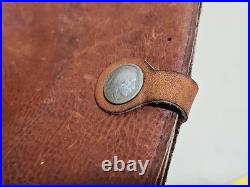
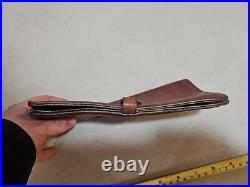
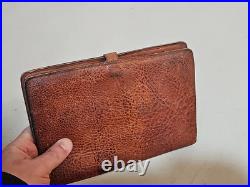
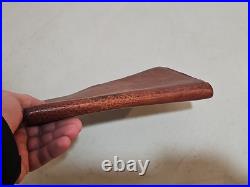
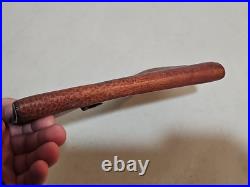
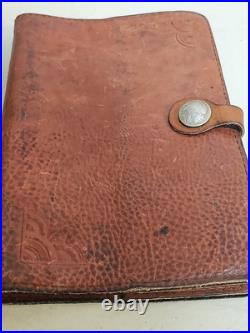
This is a VERY RARE hard to find leather journal cover. It features a Buffalo nickel Indian head snap closure for the journal leather cover. It has 2 inner pockets. The journal is in excellent condition for its age. Has a beautiful engraved leather design on the 2 corners. Measurements are in the pictures. Please check all my pictures and other listings for more rare and hard to find items.
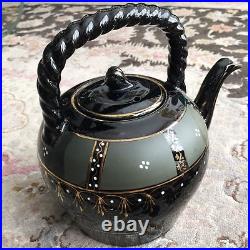
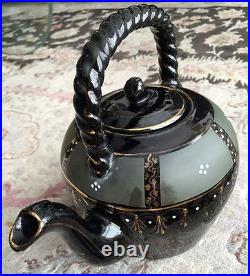
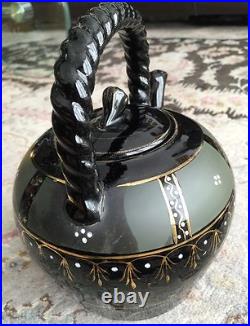
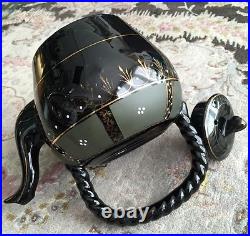
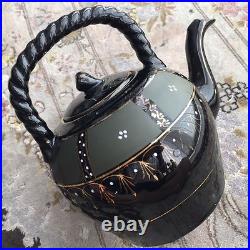
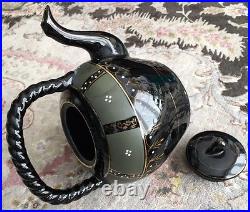
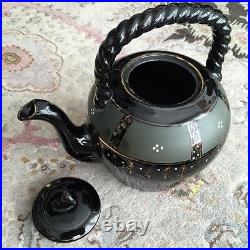
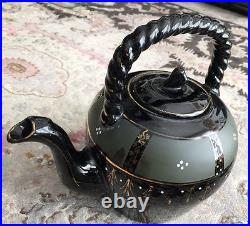
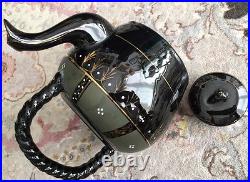
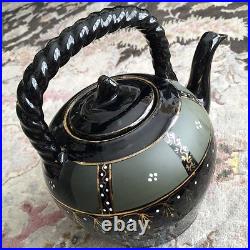
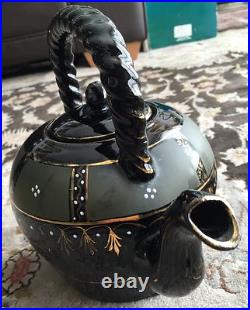
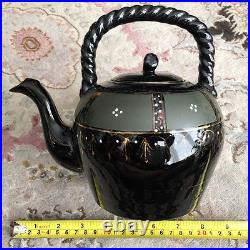
Very rare antique early English Victorian (pre 1850s) glazed Jackfield Pottery “Black Ware”ceramic teapot (approximately 9/23cm). In very good condition without any chips or cracks and minor crazing commensurate with age. This teapot is unusual in shape and colour and has been hand decorated and beautifully gold gilded. Around 175 years old. Beautiful signs of aging. Generally in exceptional condition. Please browse all 12 photographs attached for size and condition as they are self explanatory. Jackfield pottery marks are often minimal or absent on classic pieces, relying more on distinctive features like rich, glossy black glaze, reddish earthenware, gilding/enamel, and specific shapes (like three-footed items); marks, when present, are usually late Victorian or later, including factory names like Maw & Co. Or registration numbers (like Rd117962), as the original 18th-century production from Shropshire was largely unmarked. Key Identifying Features (Unmarked Pieces). Color & Glaze were usually deep, lustrous, almost metallic black glaze, sometimes with hints of purple or red. The body terracotta or reddish earthenware, appearing pale or buff in later periods and decoration faded oil gilding, cold enamels (pale blue/white), or slip designs (floral/foliate). Early items often have three feet or press molded. Unglazed or clear-glazed bases are common. Most authentic early Jackfield ware c. Later Victorian or revival pieces might bear factory names like Maw & Co. Many Staffordshire potters (like Thomas Whieldon) also made “Jackfield-type” ware. The original Jackfield, Shropshire, production peaked in the mid-18th century; later items are often “Jackfield-type” or revivals. Jackfield pottery, originating in Jackfield, Shropshire, England, from the 1713 founding by Richard Thursfield, is famous for its lustrous, highly vitrified black earthenware decorated with oil-gilded flowers and figures, mirroring Japanese lacquerware. While the original pottery thrived in the mid-18th century, the style saw revivals, with later production shifting heavily towards high-quality decorative tiles by companies like Craven Dunnill and Maw & Co, making Jackfield a significant center for tiles, including those used in famous buildings and the London Underground, with some production continuing today. Key Periods & Characteristics. The iconic black-glazed earthenware (Jackfield Ware) was made by the Thursfield family, sometimes featuring Jacobite inscriptions and oil-gilding. Potters like Thomas Whieldon in Staffordshire also made similar “Jackfield-type” wares, often with redder clay. Victorian Era (19th Century). Production expanded significantly into tiles, becoming a major global supplier of decorative tiles, including encaustic tiles. 20th Century & Beyond. The manufacturing, including Art Nouveau and Art Deco styles, continued until the 1970s, with specialist production for conservation and restoration (like for the Houses of Parliament) occurring even today. The village of Jackfield became a significant industrial hub for ceramics, supported by local clays, coal, and river transport on the River Severn. The history is preserved at the Jackfield Museum, part of the Ironbridge Gorge Museums in the UK.
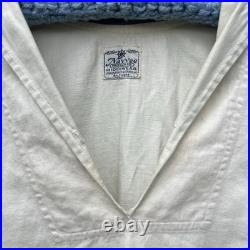
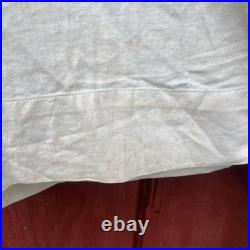
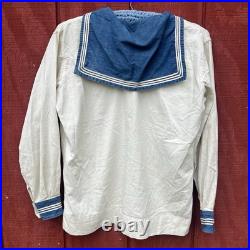
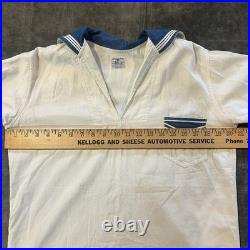
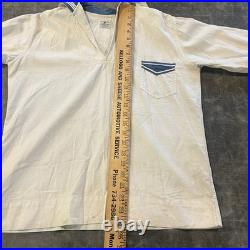
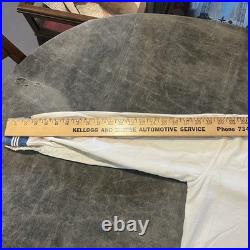
Blouse is in good condition for its age. Some wear and tear, as well as some stains. See photos for more details. Pit to pit is 20.5 inches. Length is 24 inches. Shoulder width is 17 inches. Sleeve length is 21 inches.
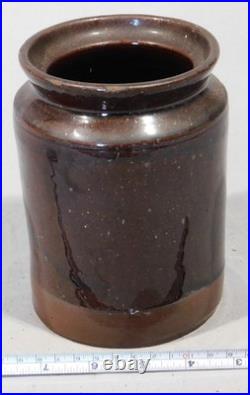
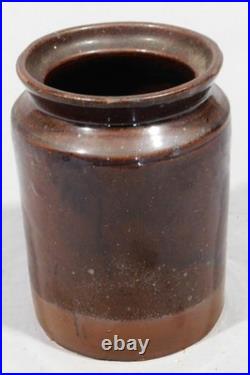
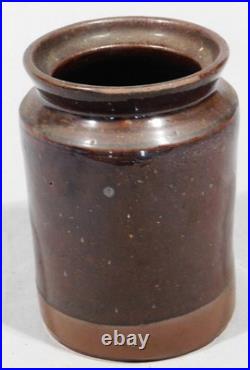
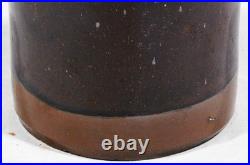
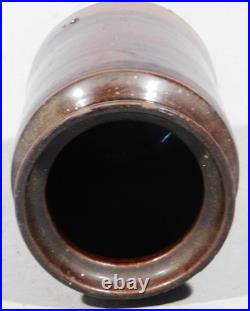
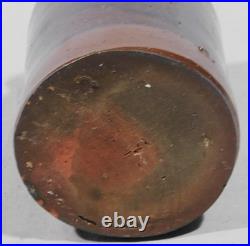
WE LIST FRESH-TO-THE-MARKET ITEMS SEVERAL TIMES A WEEK. BEAUTIFUL ANTIQUE REDWARE STORAGE JAR. About 6″ tall x 5″ diameter. Wonderful glazed redware jar. Probably early 19th century. Used for storing oysters, pickles, tobacco, butter, etc. Likely New England origin. Iron-rich, lightly speckled glaze. Coiled firing lines visible. No hairlines or craquelure. Some tiny rim frits. Rich, dark molasses drip glaze (all visible in the images). A FINE EARLY AMERICAN REDWARE GLAZED JAR.
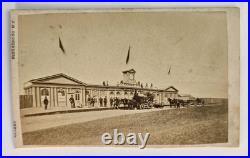
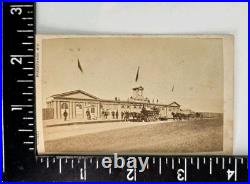
This rare antique CDV photo captures an early scene of the England railroad station, featuring a unique sepia image oriented in landscape. The photograph, taken by Guggenheim in the United Kingdom during the late 19th century, showcases a piece of social history and documentary style art from the railroad industry. This one-of-a-kind 1st edition CDV is a valuable collectible for photo enthusiasts and history buffs interested in portrait and figurative art from that time period.
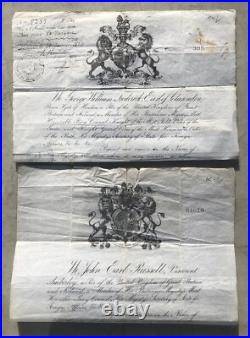
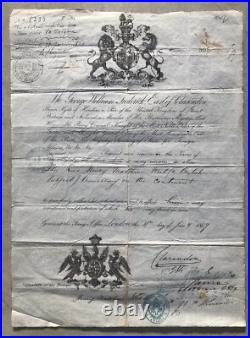
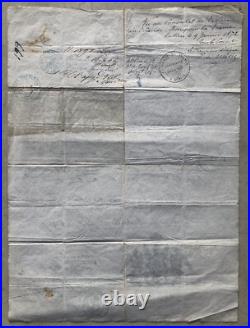
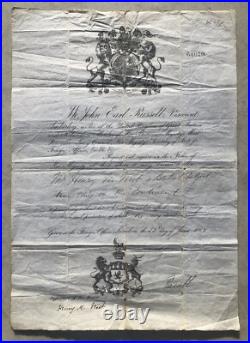
Discover a remarkable piece of British history with this pair of 19th-century travel permits issued by the British Foreign Office. These authentic documents, dated 1863 and 1869, were granted to Henry M. West for continental travel. Signed by prominent Foreign Secretaries of the era-John Earl Russell and George William Frederick, Earl of Clarendon-these permits provide a fascinating glimpse into diplomatic practices of the time. Date: June 8, 1863 & January 1869. Signatures:John Earl Russell (1863) and George William Frederick (1869). Design: Includes ornate crests, handwritten details, and stamps for validation. Historical Value: Reflects travel and protection protocols during Victorian-era Britain. Perfect for collectors of antique documents, historians, or genealogy enthusiasts. A unique addition to any collection. Don’t miss the chance to own this extraordinary piece of the past! Worn with creases and a few slight tears.
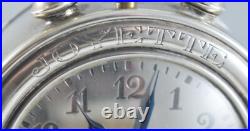
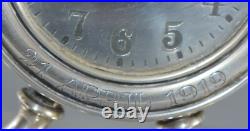
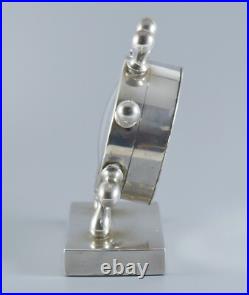
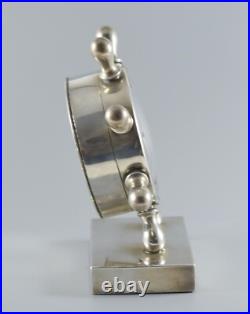
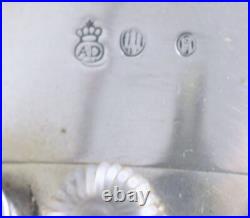
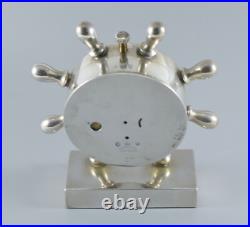
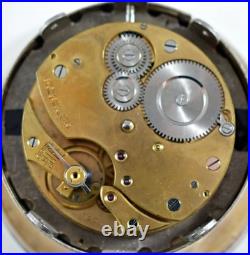
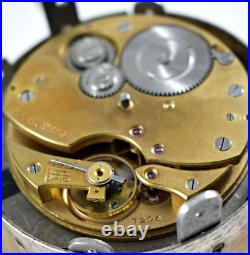
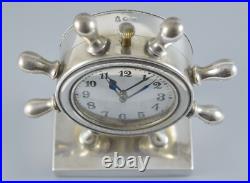
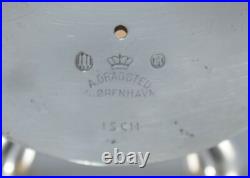
This is a superb and rare to find Antique Danish. The heavy Silver case and face are in good condition with just a little age-related wear, but no dings or dents. The base could do with tightening a little to the clock as there’s a very small amount of movement, but access isn’t possible, however it is still stable. The clock movement is in working order and winds up as it should from the crown to the top. Pulling the crown up allows the hands to be moved manually to set the correct time. There is an inscription to the front with the name “Joyette” to the top and the date “21 April 1919″ to the bottom. To the top and reverse of the case are the Danish hallmarks for 1919 as well as the makers mark and name of A. The case measures approximately 15cm high and 9.5cm by 6cm at the base. Please note: There are reflections shining onto the item in the photos from the background lighting used. Please take a look at the photos to evaluate the condition for yourself as. We have many other collectable items for sale at affordable prices, please feel free to take a look.
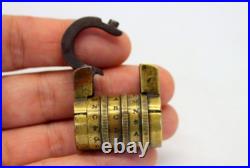
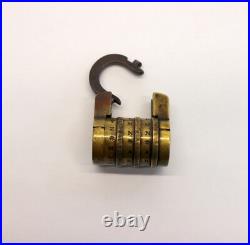
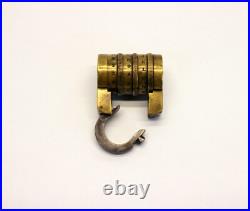
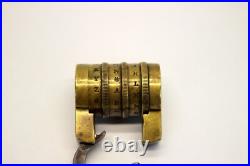
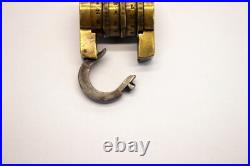
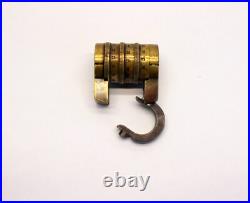
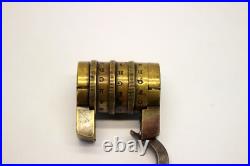
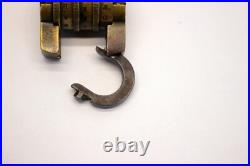
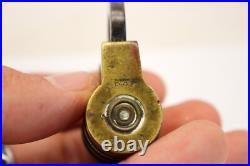
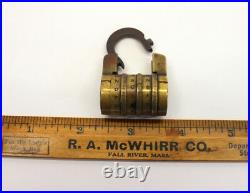
This late 18th, early 19th century lock is signed T. BRASS BODY & COMBINATION WHEELS / Steel Locking Loop. This combination lock remains UNLOCKED! The wheel spins freely. It is very good with light wear, original patina. PLEASE SEE PHOTOGRAPHS FOR CONDITION AND MEASUREMENT! PLEASE LOOK AT ALL PHOTOGRAPHS FOR CONDITION AND MARKINGS AS THEY ARE PART OF DESCRIPTION.
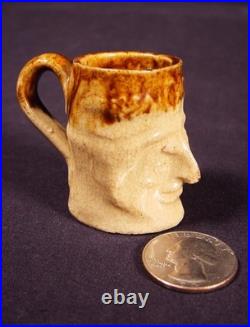
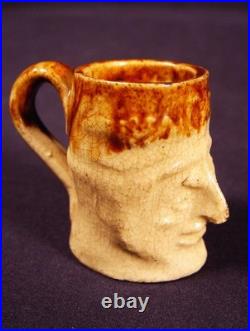
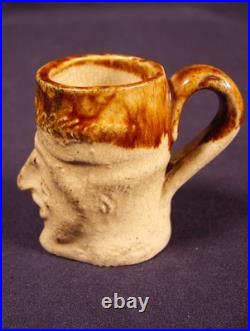
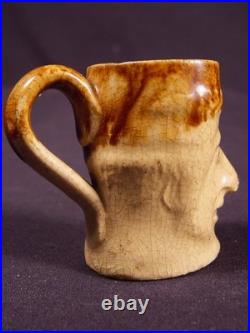
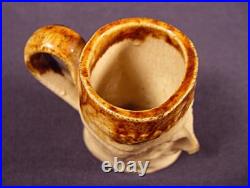
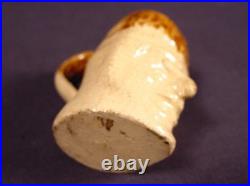
This is an interesting tiny child’s mug dating to the early 1800s. This form is known as a face mug and would have been. Made as novelty gift item for a child. I’ve seen other small face mugs but they have all been larger than this little fellow. Measuring only 1 ¾ high the mug is molded in the form of a man’s head. The rim is accented with Rockingham glaze. The mug is in its original condition no damage or repairs. Loading...X