
A Rare Japanese Cloisonne Vase in the manner of Namikawa Yasuyuki's Early Work

A Rare Japanese Cloisonne Vase in the manner of Namikawa Yasuyuki's Early Work
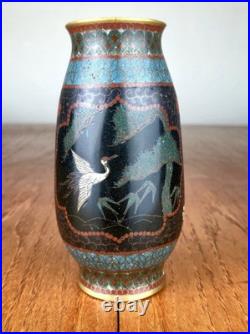
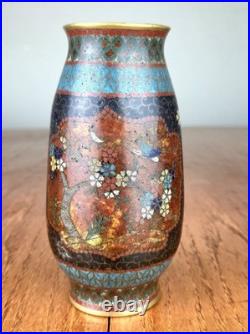
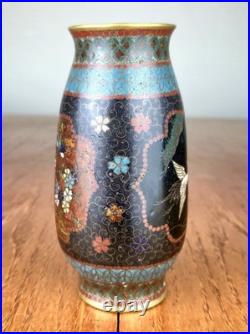
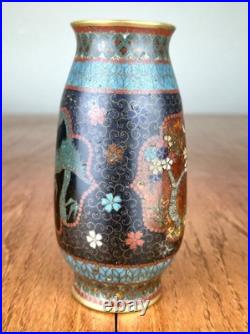
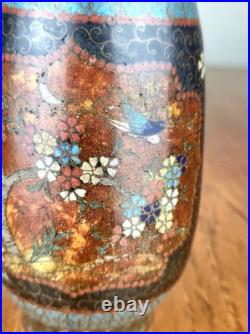
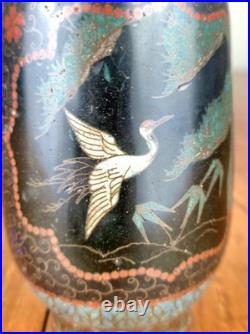
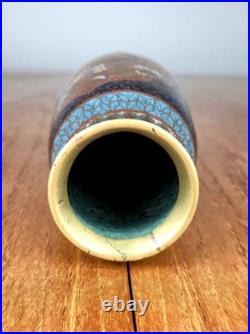
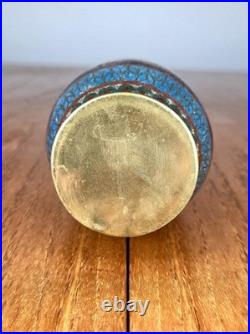
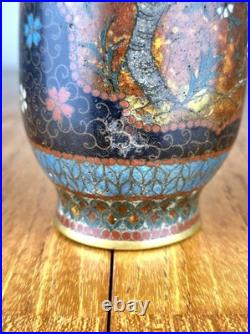
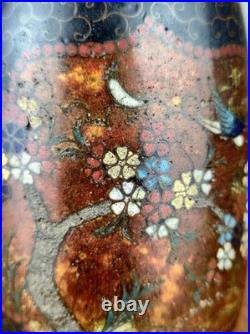
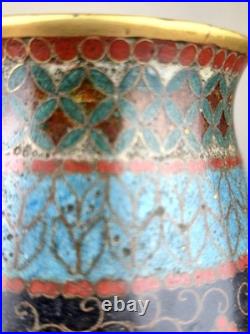
A Rare Japanese Cloisonne Vase in the manner of Namikawa Yasuyuki’s Early Work. In the early stage of Namikawa’s career sometome in the 1870s, he was known to develop a complex translucent enamel technique over copper which produced the orange/red type enamel referred to as cuprite. Published research and similar examples of this type lead to a potential attribution. 15.5cm // 6 inches tall Heavy pitting and wear associated to an object from the mid to late 1800s. The technique was in early phases and wasn’t quite refined leading to age related flaws. Please view all images.
A Rare Japanese Cloisonne Vase in the manner of Namikawa Yasuyuki's Early Work