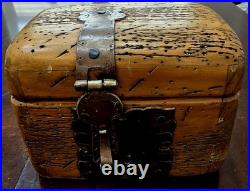
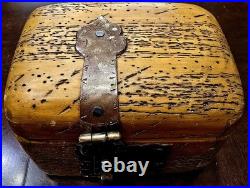
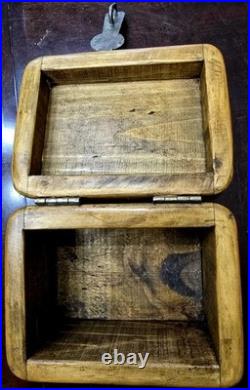
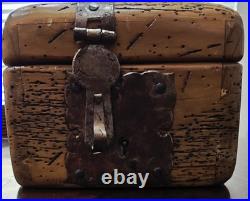
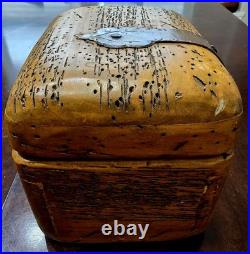
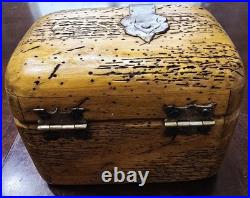
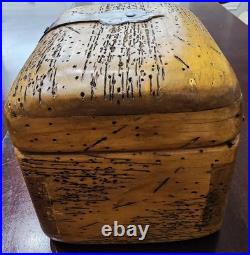
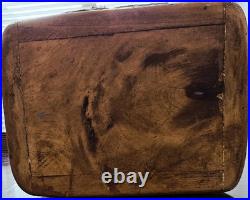
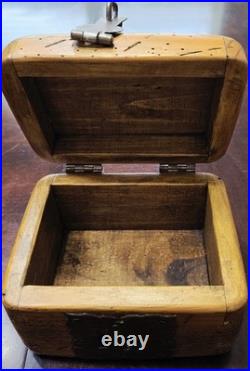
This rare antique small worm wood chest box is a unique piece with a brass handle finish and a solid wormwood finish. It features a rectangular shape with one door that has a hinge and clasp mechanism. Suitable for jewelry and other small items, this chest exudes an antique style with a Victorian-era design from the late 1800’s to the early 1900s. Made of wood and brass, this fully assembled piece adds a touch of artistry to any room. It weighs approximately 3 lbs. Please study the pictures and information to determine the authenticity and condition of this item. It is in good condition, especially considering its age. Minimal nicks and no major damage or abuse. 12″ x 12″ x 12.
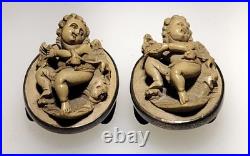
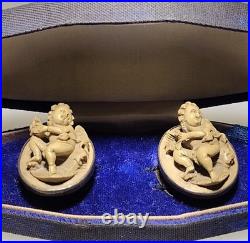
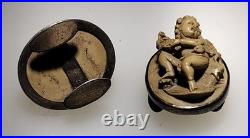
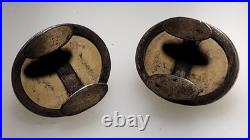
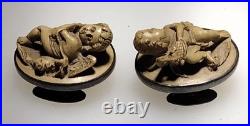
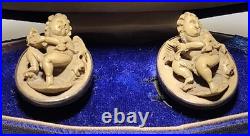
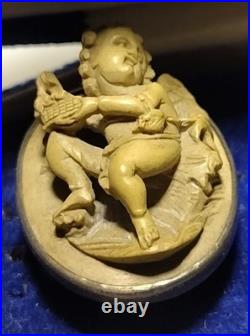
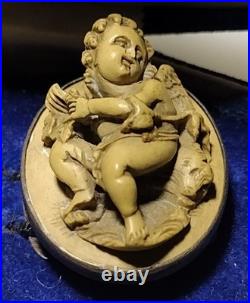
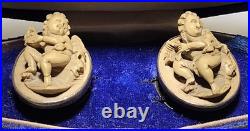
Up for sale is a Rare Vintage Antique pair of Early Victorian Silver Hand Craved Lava Putti Cufflinks. They measure approx: 1″ x 7/8″ and are 3-dimensional. Very good antique condition with the note that one link has a carving flaw, the nose of one Putti. It was chipped in carving for the nostril is complete but just flattened. Please view all photos, inclding close-ups, for they are part of the description.
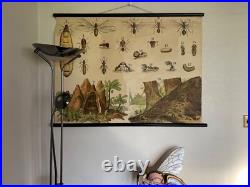
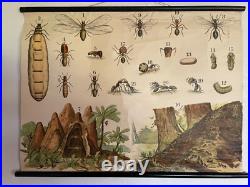
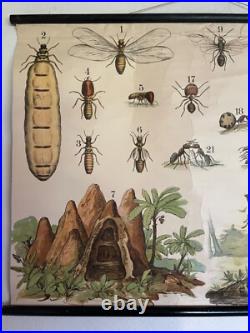
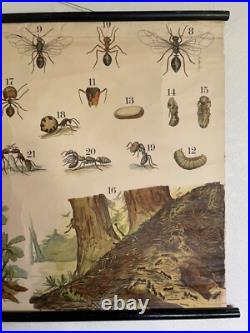
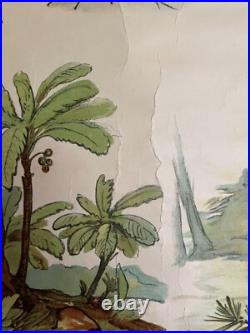
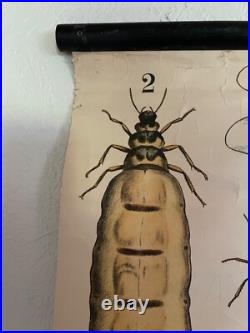
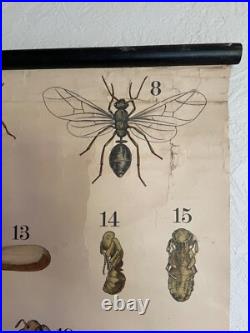
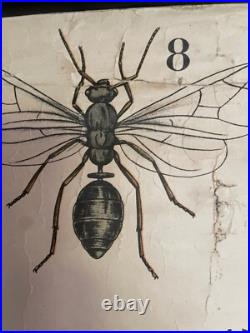
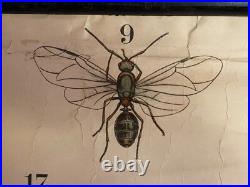
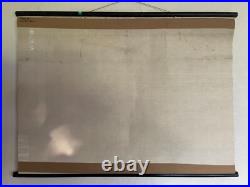
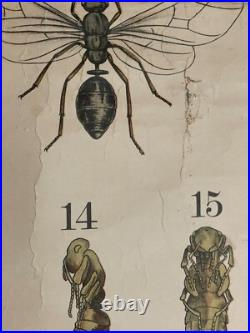
For sale here is a wonderful rare vintage pull down school chart of. This chart is by Franz Engleder and was printed and distributed by JF Schrieber around the late 1800s to early 1900s. Width:(including poles):106cm. (canvas 102cm x 74cm). This lovely lithograph was made by German botanist Franz Engleder who was commissioned to produce 60 school charts spanning zoology and botany. It features lovely illustrations of ants. Printed on paper it is backed with canvas and has black painted wooden poles top and bottom. This chart has spent most of its life rolled up in a school cupboard so the colours are still bright this is in part due to the painstaking lithographic technique of printing. This chart is not new, so please be sure to check all photos. There is wear in keeping with its age. This chart is in vintage condition obviously there are some signs of wear most notably on the edges, there is also some heavy wear near the top dowel in the form of tears to the paper which have been glued and reinforced with fabric tape. We have many other charts and maps for sale so be sure to check out our shop. Thank you for looking.
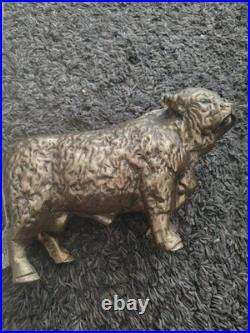
This rare antique brass bull sculpture is a heavy vintage display piece from the late 1800s to early 1900s, originating from the United Kingdom. Crafted from brass, this ornament figurine depicts a cattle animal class with a unique and intricate design. Perfect for collectors of farm and countryside animal memorabilia, this unmounted sculpture adds a touch of history and charm to any display or collection.
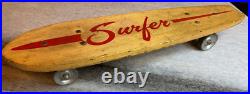
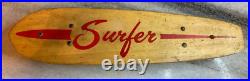
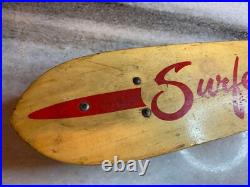
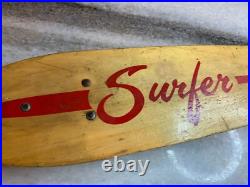
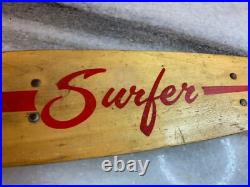
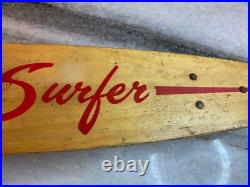
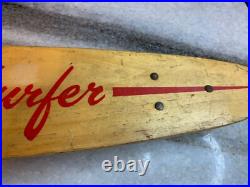
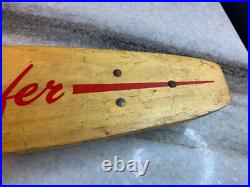
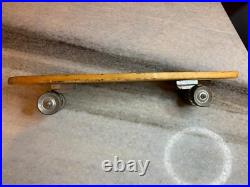
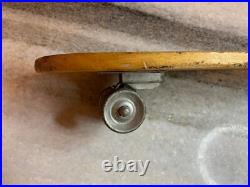
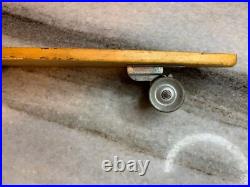
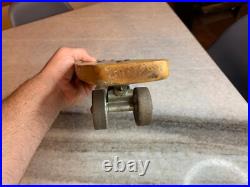
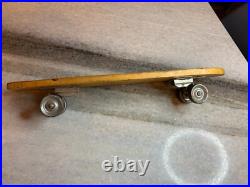
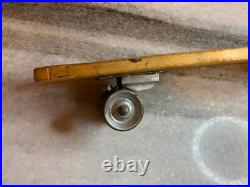
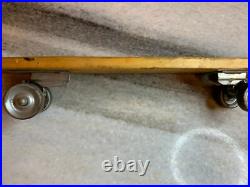
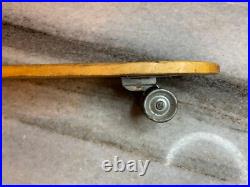
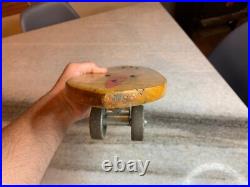
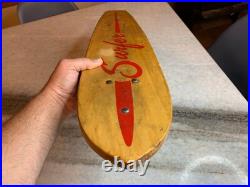
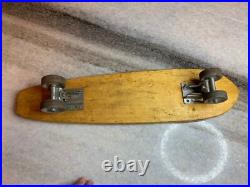
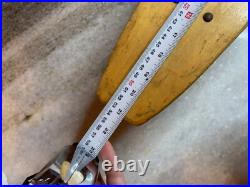
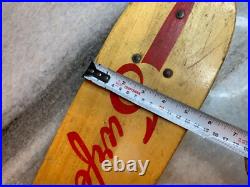
Of the generation whereby they were marketing these as a cheaper/easier means to learning how to surf aka “sidewalk surfing”; Made all the clearer by the fact that this model is literally “Surfer” in a beautiful, cursive, red font. A piece of americana and a key moment in time for the evolution of the american skateboard! Imagine riding down a steep california hill riding these METAL wheels! 21″ L x 5.25″ W. Overall nice condition, with a very bright, vibrant, cursive red logo. Please note the faint scuff to the original shellac just above the “UR” in surfer. This skateboard was made in Jacksonville Illinois. However, before skateboards there were scooters, sometimes known as kick scooters and push scooters. Varied forms of scooters have been traced back to the early 1900s, most of them made from wood, metal, or a combination of the two. Scooters had anywhere from two to four wheels. Some of the wheels were metal and others were similar to the wheels on pedal cars. In the 1940s and 1950s, crate scooters made popular sidewalk vehicles. Most crate scooters were handmade. They were relatively inexpensive and simple for kids to construct by using a milk crate or wooden fruit box and metal roller skate wheels attached to a wooden 2 x 4. Eventually kids started removing the boxes and handlebars and just started riding the board with wheels, reminiscent of the famous skateboard scene in the 1985 film Back to the Future. By the early 1960s, skateboarding started luring participants from the surfer scene. In 1962 a southern California surf shop, Val Surf, began making its own brand of skateboards and struck a deal with Chicago Roller Skate Company for the wheels. The skateboards began to attract everyday surfers who could use the boards when they weren’t in the water, and thus the term “sidewalk surfer” was coined. Additionally, skateboarding gained popularity when Larry Stevenson, publisher of Surf Guide, promoted it in his monthly magazine. In 1963, Stevenson made the first professional skateboards using the Makaha brand and organized the first known skateboarding contest. That same year saw an evolution in skateboard design with the use of clay (also known as composite) wheels that replaced treacherous metal ones. Moving ahead, in 1964 surf and sailing entrepreneur Hobart “Hobie” Alter joined forces with Vita-Pakt company to make a line of Hobie skateboards; the Hobie line also sponsored several contests and professional skaters. Later that summer, the musical group Jan and Dean performed “Sidewalk Surfin” on Dick Clark’s American Bandstand, an event which helped further popularize skateboarding with mainstream society. In 1965, the skateboarding sport peaked as manufacturers tried to keep up with the demand, cranking out an estimated 50 million skateboards between 1963 and 1965. In May, the world’s first skatepark, Surf City in Tucson, Arizona opened to the public..
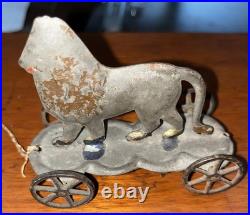
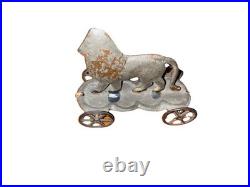
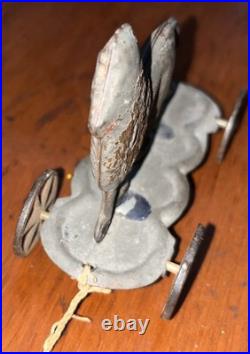
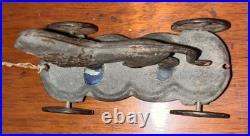
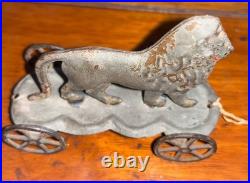
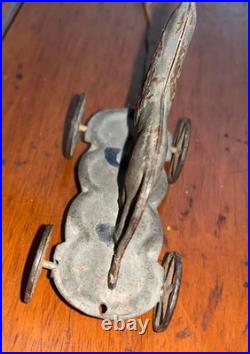
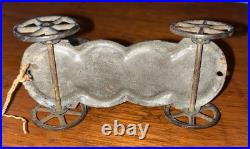
This product is a rare vintage antique early circus tin lion pull toy from the late 19th century. It is likely a collectible item for those interested in vintage and antique toys, especially those related to the circus theme. The toy would appeal to collectors looking for unique and nostalgic pieces from the past, with the added allure of its historical significance in the context of early circus entertainment. Has some original paint and is nice condition for age. Approximately 3.00″H x 3.50″L x 1.750W.