
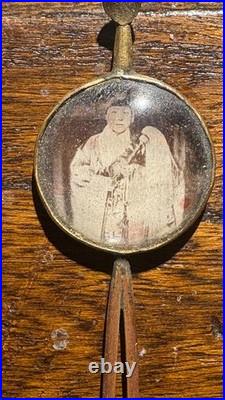
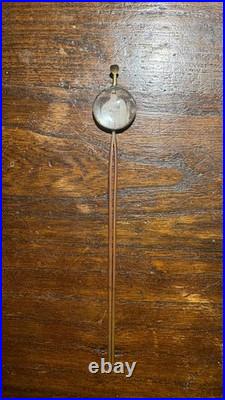
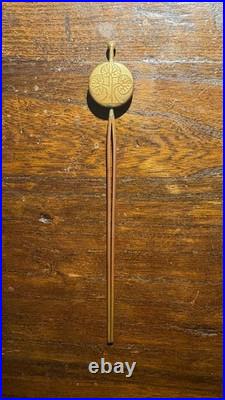
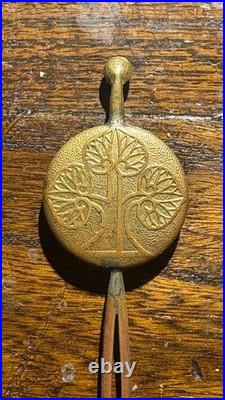

Rare Meiji Japanese Kanzashi with Kabuki Actor Photograph Albumen Print, Onnagata, c. A rare and historically significant Japanese kanzashi (hairpin) from the Meiji period, incorporating an original photographic portrait of a kabuki actor beneath a domed glass cover. The inset image is a miniature albumen print, the dominant photographic process of the late 19th century, widely used in Japan for studio portraiture. The photograph depicts an onnagata (male actor specializing in female roles) in full theatrical costume, wearing a tall eboshi (court cap) and holding a hossu (Buddhist fly whisk) -identifying the figure as a high-ranking female character in priestly or ritual guise from the kabuki repertoire. Unlike later cut-down photographs, the image appears to be a purpose-made small-format print, likely produced as part of a series of actor portraits (“yakusha shashin”) and intended for collection, display, or incorporation into decorative objects. The sole known parallel of a kanzashi incorporating an identical actor photograph is held in the National Theatre, Tokyo (actor Hanayagi Shotaro Collection). Such pieces can be understood as early forms of celebrity-image adornment, reflecting the popularity of kabuki actors in the Meiji era. Photograph: albumen silver print (miniature format). Materials: copper (gilded), glass cabochon, photographic print. Subject: kabuki onnagata in priestly/ritual role (eboshi and hossu). Excellent, with light period wear. Sole known parallel: National Theatre museum, Tokyo. An unusual and evocative survival combining early Japanese photography, kabuki theatre culture, and traditional ornament -of strong interest to collectors of Meiji-era art and photography.